

2026 guide to DSCR loans in New Hampshire — no state income tax (I&D repealed 2025), 1.86% property tax, Manchester/Portsmouth markets, and 90-120 day non-judicial foreclosure.
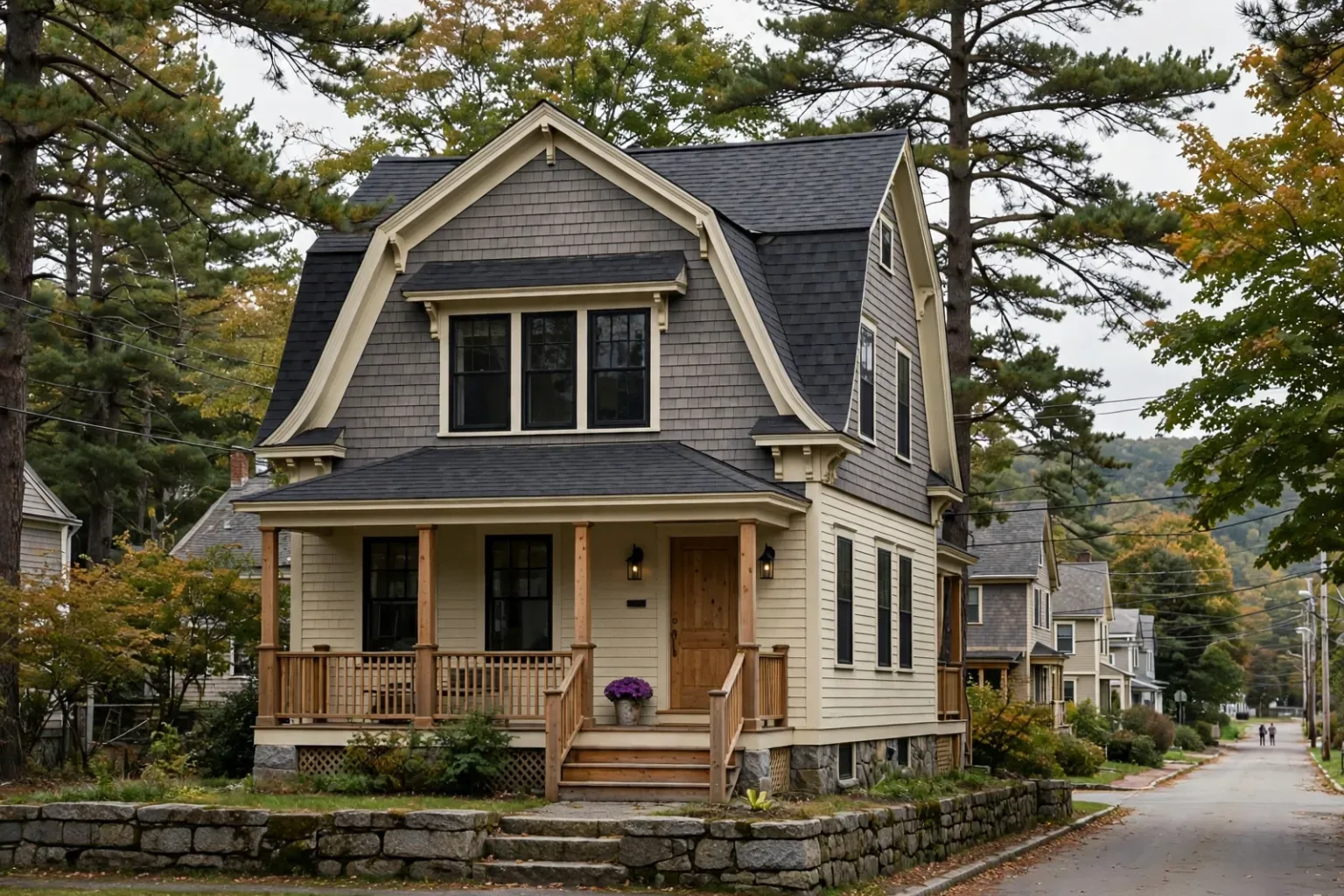
New Hampshire is an unusual DSCR state. No state income tax, no sales tax, non-judicial foreclosure, and no rent control — all very investor-friendly. But property tax is one of the four highest in the country, and that single line item dominates DSCR underwriting here. The state has three or four real investor metros (Manchester, Nashua, Portsmouth, Concord), all with distinct economic drivers. For investors building Northeast portfolios, NH offers genuine tax diversification benefits.
This guide covers DSCR lending in New Hampshire, the property-tax structure, and the markets that matter.
Why Investors Choose New Hampshire
New Hampshire’s “Live Free or Die” tax structure — no state income tax, no state sales tax — attracts both residents and investor capital. Population growth has been modest (0.1-0.4% annually), but the southern tier of the state (Hillsborough and Rockingham counties) has gained population as Boston-area workers relocate northward for lower housing costs, better tax treatment, and access to outdoor recreation.
Manchester-Nashua is the dominant metro. Liberty Mutual has major operations here. Elliot Health, Dartmouth-Hitchcock, and Catholic Medical Center anchor healthcare. DEKA Research (Dean Kamen’s company), BAE Systems, and a growing biotech/med-device cluster round out tech employment. Southern NH is functionally part of greater Boston for commuting purposes.
Portsmouth-Dover is the seacoast economy — tech startups, defense contractors (Portsmouth Naval Shipyard — technically on the Maine side of the border but most workers live in NH), tourism, and Boston-commuter professionals.
Concord is the state capital. Hanover hosts Dartmouth College. Keene and Lebanon are smaller college-town markets.
DSCR Loan Rules in New Hampshire
Most national DSCR lenders fund New Hampshire. There are no state-specific DSCR restrictions, no PPP prohibitions, and no unusual licensing requirements beyond standard New England mortgage-lender licensing for out-of-state non-depositories.
Typical terms: min DSCR 0.85-1.20 (tight because property tax narrows PITIA margins), max LTV 75%, min FICO 680-700, 6-9 months reserves. October 2026 NH DSCR pricing tracks the national tables on /rates (720 FICO / 75% LTV / 1.00–1.24 DSCR anchor 6.75%).
Taxes & Carrying Costs
Property tax is the whole story. New Hampshire effective property tax rate of 1.86% is among the four highest in the country. Why: no state income tax, no state sales tax, so all local services including K-12 education fund through property tax. The Statewide Education Property Tax (SWEPT) plus local town/city rates plus county rates produce total bills that often top 20 mills.
A $350K Manchester rental carries roughly $6,500-$8,000 annually. A $600K Portsmouth rental can carry $9,500-$12,000. Model this accurately — it’s the single largest operating expense in most NH investor pro formas.
No state income tax on wages is a real benefit. NH historically taxed Interest and Dividends income (3% in 2024), but the I&D Tax was fully repealed effective January 1, 2025. As of 2026, NH taxes neither earned income nor investment income at the state level. Rental income (earned as business income via pass-through LLC) has never been subject to the I&D tax regardless.
NH has no state sales tax. NH LLC fees: $102 formation, $100 annual report.
Insurance in NH is moderate — $1,000-$1,500 per $300K inland. Coastal properties (Portsmouth, Hampton, Rye) run higher with wind exposure. Lake-front properties in Lakes Region have specific coverage considerations.
Foreclosure & Eviction Landscape
New Hampshire is a non-judicial foreclosure state. Power-of-sale foreclosure under RSA 479 requires 25 days of published notice (three-week publication) plus statutory mailed notice. Typical timeline: 90-120 days from notice to auction. One of the faster Northeast foreclosure processes.
Eviction in NH runs 30-60 days. Non-payment starts with a 7-day Demand for Rent. Landlords file in district court; hearings schedule in 3-4 weeks. Physical removal follows judgment.
Landlord-Tenant Law
No rent control. NH statute preempts local rent caps. Security deposits: no statutory cap for non-furnished dwellings (one month is market practice); furnished rentals can require larger deposits. Landlords must hold deposits in interest-bearing escrow accounts if tenancy is 1+ year. Deposits must be returned within 30 days with itemized deductions. No statewide rental registration.
Top New Hampshire Markets
Manchester (Hillsborough County) — NH’s largest city. Liberty Mutual, Elliot Health, healthcare and finance. DSCR properties in Back East, West Side, and Hooksett neighborhoods price $300K-$475K with rents $1,900-$2,500. Cap rates 5.5-7%.
Nashua (Hillsborough County) — Second largest. Tech and healthcare employer base, Massachusetts-commuter bedroom community. DSCR properties $325K-$500K with rents $2,100-$2,700.
Portsmouth (Rockingham County) — Seacoast. Tech, defense, tourism. Most expensive NH metro. DSCR properties $525K-$825K with rents $2,500-$3,500. Tight DSCR ratios; appreciation trajectory has been strong.
Concord (Merrimack County) — State capital. Smaller market. DSCR properties $275K-$400K with rents $1,700-$2,200.
Dover (Strafford County) — Seacoast-adjacent, University of New Hampshire proximity. DSCR properties $325K-$475K with rents $1,900-$2,500.
Special Considerations
Property tax reassessment: NH towns reassess on variable schedules (3-5 years typically). A sale can trigger a reassessment. Model the post-reassessment bill, not the seller’s legacy number. Boston-commuter economics: many southern NH rentals are sustained by Massachusetts-commuter income; if MA employment weakens, southern NH rent growth slows.
Entity Formation Notes
NH LLCs cost $102 formation and $100 annually. Standard structures apply. Many NH investors use Wyoming or Delaware parent holding companies. NH recognizes series LLCs. See the entity structure guide.
Getting Started
Use the DSCR calculator with careful property-tax modeling, check current rates, then get matched.
Related guides: Massachusetts, Maine, Vermont.