

DSCR loan Ohio guide 2026 — rates, requirements, Columbus/Cincinnati/Cleveland cash-flow yields, judicial foreclosure notes, and lender matching.
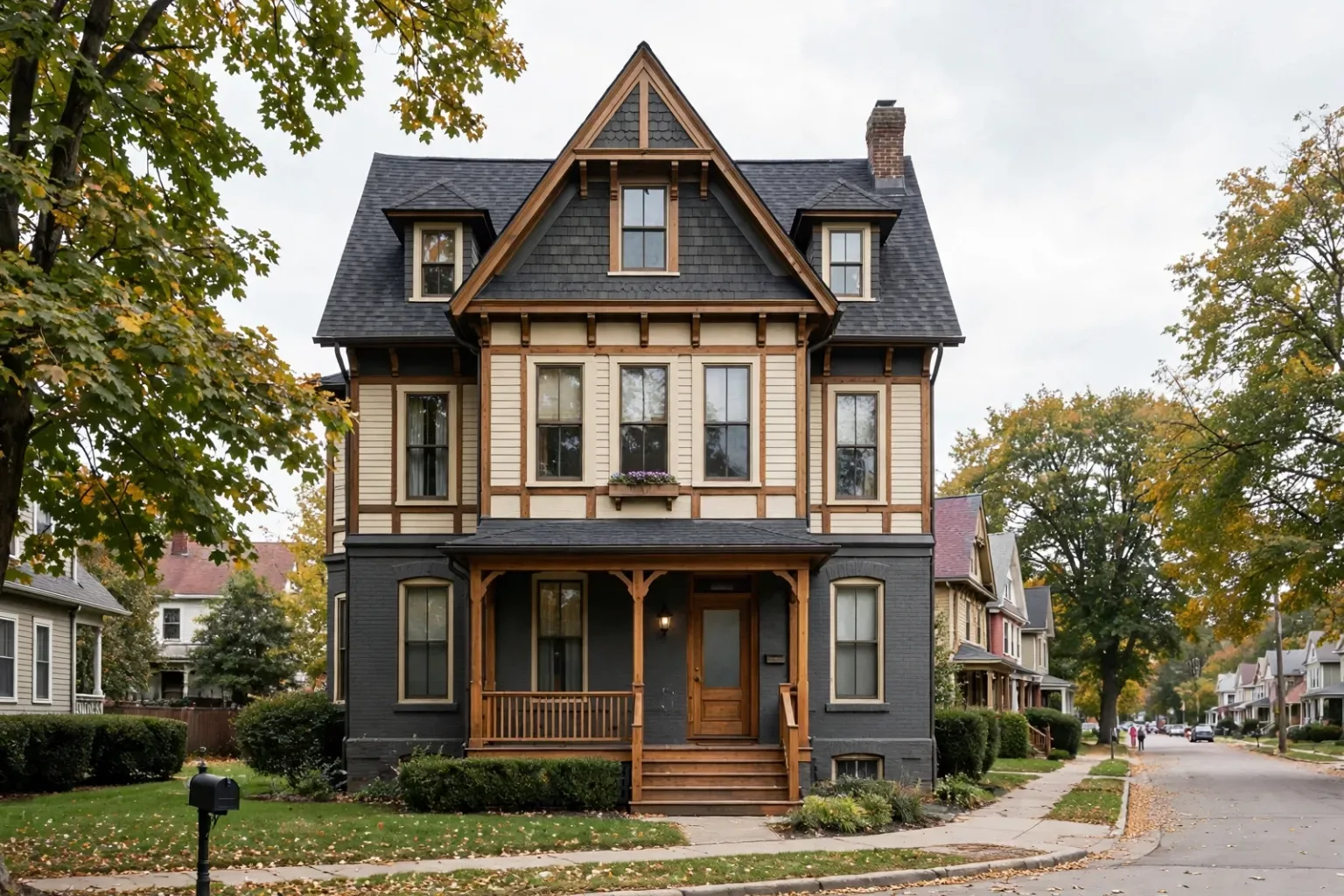
Ohio DSCR facts on this page
These figures are the published profile on this page. They are not a mortgage rate.
- Effective property tax: 1.59%
- State income tax: yes
- Foreclosure: judicial
- Eviction timeline: 30-45 days
- Statewide rent control: no
- Prepayment penalty: capped at 1% for five years on 1-2 unit loans (Ohio Rev. Code §1343.011)
The table on DSCR rates is the national DSCR index, not a Ohio quote. Published program fields, not a ranking, are on best DSCR lenders.
Ohio is the cash-flow champion of US single-family rental markets. While coastal investors chase appreciation, Ohio operators compound 7%-12% gross yields on B/C-class SFR portfolios and refinance into DSCR loans to recycle capital every 2-3 years. Columbus has emerged as the state’s appreciation story (Intel’s $20B Licking County fab, a young and growing population); Cleveland, Cincinnati, Dayton, and Toledo remain among the best rent-to-price ratios in the country for DSCR operators.
This guide covers the Ohio DSCR environment in 2026: lender set, taxes, the slower judicial foreclosure clock, eviction process, and the five metros driving investor volume.
Why Investors Choose Ohio
Ohio’s appeal is structural and unambiguous: the math works. Entry prices on B/C-class SFR in Cleveland, Toledo, and Dayton remain in the $80K-$180K range, with rents of $1,100-$1,800/month on typical 3BR homes. Gross yield frequently exceeds 10%. Columbus has been the appreciation outlier — Intel’s New Albany semiconductor fab, JPMorgan’s largest non-NY campus, and steady state-capital and OSU employment base have driven 5-year appreciation well above Cleveland and Cincinnati.
The tradeoffs are real. Ohio foreclosure is judicial (6-12 months), property taxes are high (~1.59% effective), and municipal regulations on rental-registration and lead-inspection ordinances (Cleveland, Toledo, Cincinnati) add compliance overhead. Operators who absorb that friction are rewarded with yield.
DSCR Loan Rules in Ohio
No state-specific DSCR restrictions beyond the PPP cap. Ohio caps prepayment penalties on 1–2 unit loans at 1% of the original principal for five years, with none after that (Ohio Rev. Code §1343.011); standard PPP structures remain available on 3-4 unit property. Confirm the terms with your lender. Non-QM licensing via the Ohio Division of Financial Institutions. Every major national DSCR lender funds Ohio. Midwest-specialist shops (Temple View Capital, RCN Capital, Renovo Financial) actively compete on Ohio files, often beating national pricing on smaller-balance ($75K-$150K) deals.
| Typical Ohio DSCR Terms, 2026 | Range |
|---|---|
| Minimum DSCR | 0.75 - 1.25 |
| Max LTV (purchase) | 75% - 80% |
| Max LTV (cash-out refi) | 70% - 75% |
| Minimum FICO | 620 - 680 |
| Minimum loan amount | $75K-$100K (varies by lender) |
| Prepayment penalty | 1-2 unit: max 1%, none after 5 years; 3-4 unit: 5/4/3/2/1 standard |
Minimum loan amount matters in Ohio more than almost anywhere else. Many national DSCR lenders have a $75K-$100K floor. If you’re buying a $55K Cleveland turnkey, you’ll need a lender with a $50K or $55K minimum — a smaller subset of the market.
October 2026 OH DSCR pricing tracks the national tables on /rates (720 FICO / 75% LTV / 1.00–1.24 DSCR anchor 6.75%). The judicial-foreclosure premium adds roughly 0.25%-0.375% versus comparable Indiana or Kentucky quotes.
Taxes & Carrying Costs
State income tax. Ohio adopted a flat 2.75% personal income tax effective 2026 (down from 3.125% in 2025 and a 3.50% top bracket in 2024). Income at or below $26,050 is exempt. That makes Ohio’s flat rate the second-lowest in the country after Arizona’s 2.5%. Rental income from pass-through LLCs flows to the member’s OH return.
Municipal income tax. Most Ohio cities levy a 1.5%-2.5% earned-income tax. Passive rental income from a disregarded LLC is generally exempt from municipal tax, but the rules are city-specific — CCA-administered cities vs. RITA-administered cities handle pass-throughs differently. Confirm with a local CPA.
Property tax. Effective rate ~1.59% statewide, but highly variable. Cuyahoga (Cleveland) effective rates in the 2.00%-2.50% range on some parcels are common; suburban Columbus 1.50%-1.80%; Cincinnati 1.60%-1.95%. Ohio assesses at 35% of market value and applies a millage rate that varies by school district. Ohio does not have a Prop 13-style cap, so the property reassesses on sale and triennial updates can push value materially.
Ohio LLC fees. $99 to form through the Ohio Secretary of State, no annual report fee, no state franchise tax on LLCs. Among the cheapest LLC regimes in the country.
Commercial Activity Tax (CAT). Businesses with Ohio gross receipts over $6M annually owe the CAT; individual rental LLCs are generally far below this threshold and exempt.
Insurance. Standard landlord pricing. Older housing stock (especially in Cleveland and Cincinnati) requires attention to electrical (knob-and-tube), lead paint, and roof age — carriers price accordingly.
Foreclosure & Eviction Landscape
Judicial foreclosure. Ohio requires the lender to file a lawsuit in common pleas court. Typical timeline is 6-12 months uncontested; contested files can run 18+ months. This is the single biggest state-level factor in Ohio DSCR pricing — the slower foreclosure clock puts Ohio pricing 0.25%-0.375% above comparable non-judicial Midwest states.
Eviction. 3-day notice to leave for non-payment (ORC §1923.04), followed by forcible entry and detainer filing in municipal court. Hearings typically within 2-4 weeks; writ of restitution ~7-10 days after judgment. Total: 30-45 days uncontested. Faster than the foreclosure clock but slower than Georgia or Texas.
Landlord-Tenant Law
No rent control. No state statute, no enacted city ordinance.
Security deposits. No statutory cap, but deposits over $50 or one month’s rent (whichever is greater) held beyond 6 months must accrue 5% interest to the tenant. Unusual provision — ensure compliance.
Late fees. Must be “reasonable” — no statutory dollar cap. 5%-10% common.
Notice to terminate month-to-month. 30 days.
Rental registration. Cleveland, Toledo, Cincinnati, and several suburbs require rental-property registration plus periodic inspection (lead/safety). Non-compliance fines can stack. Any serious Ohio operator needs a local PM or a registered-agent setup that keeps these filings current.
Top Ohio Markets
Columbus. The state’s growth engine. Intel fab, OSU, state capital, and JPMorgan campus anchor diversified demand. Entry prices have risen to $200K-$325K in most core SFR submarkets; outer ring (Reynoldsburg, Whitehall) still offers sub-$200K pipelines. Appreciation leader.
Cincinnati. Mature, steady market; Cintrifuse and startup ecosystem; Procter & Gamble anchor employment. Over-the-Rhine redevelopment has created pockets of appreciation; most DSCR volume is B-class SFR in West Chester, Mason, and north-side ZIPs.
Cleveland. Cash-flow capital of the state. Entry prices $60K-$150K on solid B/C SFR; gross yields 12%+ routine. Cleveland Clinic, University Circle, and a logistics base anchor employment. Rental registration mandatory; many properties built pre-1978 require lead-safe compliance. Cleveland’s rental vacancy is approximately 5.8% as of Q1 2026 — among the tightest in the Midwest — supporting strong rent collection with estimated gross rental yields near 9.8% on well-maintained B-class properties.
Dayton. Smaller market, very high yields, Wright-Patt AFB tenant base. Lower institutional interest means better deals for individual investors.
Toledo. Similar profile to Dayton — low entry prices, high gross yields, auto-sector employment base, emerging logistics role.
Special Considerations
Rental-registration compliance. Cleveland’s rental-registration ordinance, Cincinnati’s lead-hazard control law, Toledo’s lead-safe certification — all require active compliance. A DSCR lender won’t police this, but your insurance carrier and future buyer will.
Ohio basement/foundation issues. Older Midwest housing stock has water-intrusion risk. Appraisers and inspectors flag this aggressively; DSCR underwriting often requires a clear-to-close on foundation conditions.
Columbus premium. Columbus Metro DSCR pricing is visibly tighter than Cleveland or Dayton — lender competition is higher, deal volume is higher, and perceived risk is lower. Expect Columbus files to price 0.125%-0.25% better than comparable Cleveland files.
Entity Formation
Form in Ohio if holding Ohio property. $99 online filing, no annual report, no franchise tax — one of the cheapest LLC regimes in the country. Single-member LLCs are permitted and pass-through by default.
Wyoming parent / Ohio operating LLC works for anonymity; Ohio filings list the member, which can be the Wyoming LLC. See our entity-structure guide.
How to Get Started
Ohio is a cash-flow, small-balance DSCR market — the key shop parameter is minimum loan amount, because many national lenders won’t touch sub-$100K files. Our free matching tool at /get-matched routes to Ohio-active lenders with the right loan-size floor for your deal.
Run the DSCR calculator, check rates, and compare lenders at /compare/best-dscr-lenders. Ohio pairs well with Kentucky for Midwest cash-flow portfolios or with Tennessee for Southeast diversification.