
Complete 2026 guide to DSCR loans in Houston — cap rates, no-PPP Texas rules, best cash-flow neighborhoods, flood risk, property tax, and the best DSCR lenders for Houston investors.
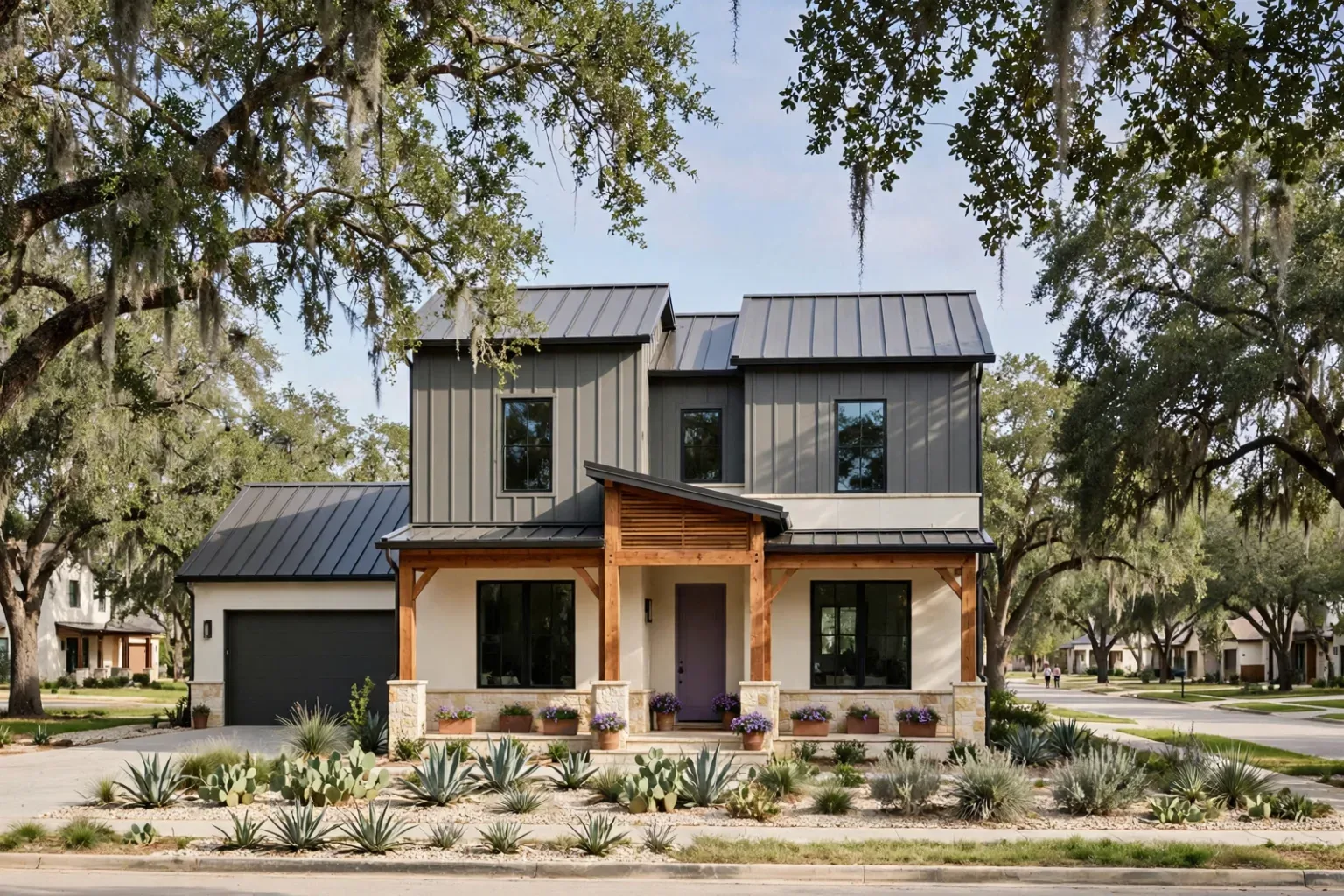
Houston is the nation’s fourth-largest city and its most diverse economy by sector — energy, petrochemicals, healthcare (the Texas Medical Center employs 106,000+ people), aerospace, logistics, and manufacturing all drive rental demand across the vast Harris County footprint. Houston’s DSCR market is deep and competitive, with active lenders in every sub-corridor. The two variables that separate informed Houston investors from those who are surprised at closing are flood-zone management and property tax modeling.
Why Investors Choose Houston
Houston’s sheer scale creates constant rental demand. The Texas Medical Center, Shell Oil, ExxonMobil, United Airlines, and dozens of major logistics employers anchor permanent households across the entire metro. Unlike Dallas, Houston has no zoning code — a Texas-unique feature that creates both flexibility and risk when buying near industrial corridors.
For DSCR investors, Houston’s median purchase price of roughly $320K is lower than Dallas, and cap rates in the eastern and southwestern corridors are meaningfully above the national average. The challenge: a substantial portion of Harris County is in FEMA flood zones, and the property tax rate is high.
The Texas No-PPP Rule in Houston
Same as all Texas properties: Texas law prohibits prepayment penalties on 1-4 unit residential investment loans. No Houston DSCR lender can quote a PPP step-down on SFR, duplex, triplex, or fourplex. The no-PPP structure adds roughly 0.25%–0.50% to the rate. You can exit the loan at any time without penalty — which matters in Houston where appreciation cycles create refi windows.
DSCR Loan Availability in Houston
All major national DSCR lenders fund Houston properties. Standard SFR and 2-4 unit files follow the same Texas parameters.
| Typical Houston DSCR Terms, 2026 | Range |
|---|---|
| Minimum DSCR | 0.75 – 1.25 |
| Max LTV (purchase, SFR) | 75% – 80% |
| Max LTV (cash-out) | 70% – 75% |
| Minimum FICO | 620 – 680 |
| Prepayment penalty | None (Texas law) |
| Flood zone properties | Allowed with active flood insurance |
Cap Rates and Neighborhood Cash Flow
2026 rental market context: Houston’s blended median rent is approximately $1,905/month as of Q1 2026, down roughly 5.73% year-over-year — one of the sharper rent declines among major Sun Belt metros. Multifamily vacancy has climbed to approximately 11.6%, driven by a record pipeline of new apartment deliveries. Single-family rental median is approximately $2,833/month and holds firmer than the multifamily market. Investors underwriting Houston SFR cash flow should model current SFR lease comps, not the blended all-unit average, and should stress-test DSCR ratios against a further 3%–5% rent softening scenario.
Houston’s no-zoning environment creates highly variable neighborhood dynamics. Stick to corridors with stable employment anchors.
East Houston / Galena Park / Deer Park: Industrial/petrochemical employment anchor, SFR $160K–$260K, rents $1,400–$1,900. Cap rates 7.0%–9.0%. Flood zone check required — many parcels are in 100-year floodplain.
Pasadena (SE Harris County): Bayou-adjacent but many properties outside flood zones, $200K–$290K SFR, $1,600–$2,100 rents. Port employment, Jacinto City corridor. Cap rates 6.5%–8.0%.
Alief (Southwest Houston): Diverse workforce housing, $180K–$280K SFR, $1,500–$2,000 rents. Heavily immigrant-populated rental market, low vacancy. Cap rates 6.5%–8.5%.
Spring / Tomball (North Harris / Montgomery): Suburban growth corridor, ExxonMobil campus nearby, $300K–$450K newer SFR, $2,000–$2,700 rents. Lower cap rates (4.5%–5.5%) but minimal flood risk and stronger tenant demographics.
League City / Pearland (South — Galveston/Brazoria Counties): Boeing/Clear Lake Space Center employment, $280K–$420K SFR, $1,900–$2,600 rents. Moderate cap rates 5.0%–6.5%, lower flood risk in newer developments.
The Heights / Montrose: Hip urban corridors, 2-4 units at $400K–$700K, strong rents. Cap rates 4.5%–5.5%. Appreciation + mid-term rental play.
Katy (West Harris / Fort Bend): Family suburbs with energy/corporate tenants, $350K–$550K SFR, $2,200–$3,000 rents. Cap rates 4.0%–5.0%.
Flood Risk: The Most Critical Houston Variable
Hurricane Harvey (2017) flooded roughly 136,000 homes in Harris County. Post-Harvey, FEMA updated flood maps significantly and the Harris County Flood Control District has undertaken major buyout programs. For DSCR investors, flood risk matters in three ways:
Mandatory flood insurance: Properties in FEMA zones A, AE, X500, or V require flood insurance as a loan condition. Budget $1,500–$5,000/year depending on elevation certificate.
Financing restrictions: Some lenders will not fund in high-risk flood zones regardless of insurance. Others will fund at reduced LTV (70% max). Always pull a FEMA zone determination before writing a contract.
Post-Harvey buyout zones: HCFCD has purchased and demolished many flood-prone homes. The resulting parcels create gaps in some neighborhoods — do a street-level review before committing.
The safest Houston DSCR strategy: avoid AE-zone properties unless you’ve modeled the flood insurance cost into DSCR and confirmed lender willingness.
Property Tax
Harris County effective rate: approximately 1.7%–2.3% of market value. This is the highest in the state of Texas, which already has high property taxes. On a $320K SFR, plan for $5,400–$7,400/year in property taxes. Surrounding counties (Fort Bend, Brazoria, Montgomery) run slightly lower.
Key point: properties reassess at market value at sale. Always get the county appraisal district estimate for the year of purchase, not the seller’s prior-year bill.
Insurance
- Hazard (wind/hail): $2,500–$5,000/year on a $320K SFR in standard zones
- Flood: Required in AE zones, $1,500–$5,000/year
- Hurricane: Coastal properties (Galveston, Clear Lake) require windstorm coverage
Houston’s insurance market has tightened post-Harvey and post-Beryl (2024). Citizens-equivalent (Texas FAIR Plan) policies exist but are more expensive. Lenders require the current-term quote during underwriting.
Best DSCR Lenders for Houston
- Kiavi — highest SFR volume in Houston, competitive pricing, strong on standard files
- Lima One Capital — BRRRR-aware, active in East Houston and Heights corridors
- LendingOne — efficient on standard files, good for investors building volume
- Griffin Funding — Houston-experienced, no-PPP Texas program optimized
- Easy Street Capital — STR and non-standard property types in Montrose/Heights
- CoreVest — portfolio blanket loans for investors holding 3+ Houston properties
Use get matched for current Houston-specific term sheets from the lenders that fit your flood zone status and property type.
Getting Started
Model your Houston deal with the DSCR calculator using the full Harris County property tax estimate and the actual flood insurance quote (not a guess). For BRRRR targets, use the BRRRR modeler. Then get matched for lender bids.