
Complete 2026 guide to DSCR loans in Austin — cap rates, STR regulations, no-PPP Texas rules, property tax, neighborhood cash flow, and the best DSCR lenders for Austin investors.
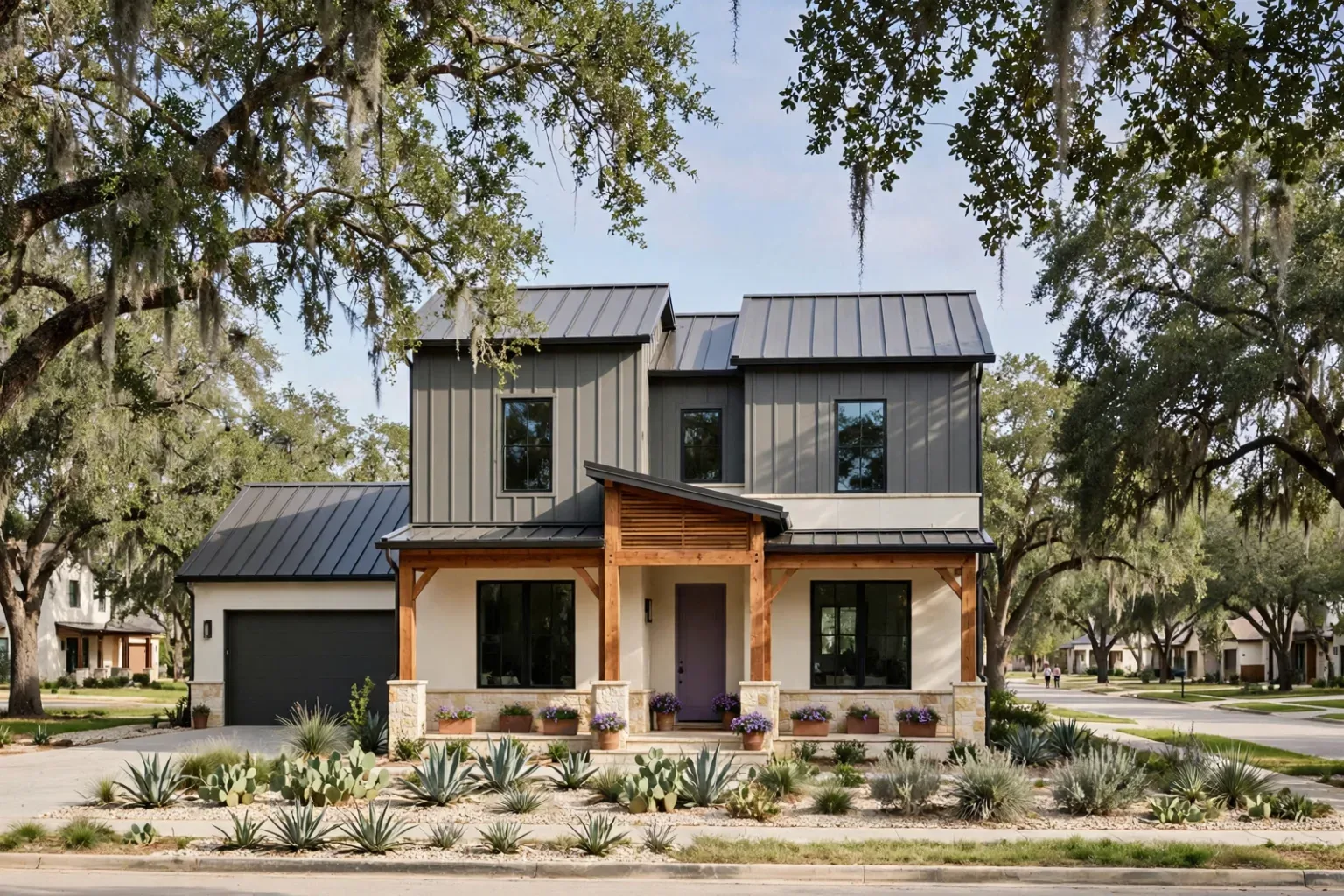
Austin’s emergence as a technology and government hub — Dell, Apple, Tesla, Samsung, Amazon, and state government employment — has made it one of the country’s most watched real estate markets. Post-2022 price correction has made Austin more accessible for DSCR investors: cap rates have improved meaningfully from the sub-3% peak, creating viable entry points in East Austin, the near-south side, and suburban corridors in the Cedar Park/Pflugerville/Buda ring.
Why Investors Choose Austin
Austin’s appeal for DSCR investors comes from three sources: tech/government employment stability, a strong STR market in the urban core and Hill Country, and a post-correction acquisition price environment that allows better DSCR ratios than the 2021 peak would have supported. The metro grew 600,000+ residents in the 2010–2020 decade; corporate HQ relocations continue to add high-income households despite recent tech layoff cycles.
The University of Texas (50,000+ students) creates persistent rental demand in the 78705/78751 ZIP codes — arguably the most durable rental base in any Austin sub-market.
The Texas No-PPP Rule in Austin
Texas prohibits prepayment penalties on 1-4 unit residential investment property loans. Every Austin DSCR quote you receive on SFR, duplex, triplex, or fourplex will be no-PPP by default. The rate is approximately 0.25%–0.50% above comparable PPP-allowed states. You cannot negotiate around this — it is statutory.
The flip side: in a market that has seen meaningful appreciation cycles, the ability to exit a loan without penalty is practically valuable.
DSCR Loan Availability in Austin
All major national DSCR lenders fund Austin properties.
| Typical Austin DSCR Terms, 2026 | Range |
|---|---|
| Minimum DSCR | 0.75 – 1.25 |
| Max LTV (purchase, SFR) | 75% – 80% |
| Max LTV (cash-out) | 70% – 75% |
| Minimum FICO | 620 – 680 |
| Prepayment penalty | None (Texas law) |
| STR income | Yes, with active license + AirDNA |
Cap Rates and Neighborhood Cash Flow
2026 rental market context: Austin’s rental market is softening substantially due to record multifamily deliveries. The metro has seen significant rent declines year-over-year as a heavy new supply pipeline works through the market. Concession rates are elevated across multifamily. SFR rents are holding better than apartment rents but are not immune to the broader supply pressure. Investors must underwrite Austin rental income using current market comps — prior-year rents will overstate achievable income in most submarkets. Vacancy stress-testing is strongly recommended given the active supply pipeline.
Austin’s post-correction market has created a more nuanced cap rate landscape:
East Austin (78702 / Govalle / Mueller): Urban 2-4 unit properties at $450K–$750K, combined rents $3,800–$6,000. Gentrification premium, tech tenant base, cap rates 4.0%–5.5%.
UT Campus / Hyde Park (78705): Student-demand SFR and small MF at $450K–$700K, rents $3,000–$5,000. Lowest vacancy in Austin, highest rent/sq ft. Cap rates 4.0%–5.0%.
South Austin (St. Elmo / Slaughter Ln / Manchaca): Mid-range SFR at $400K–$570K, rents $2,200–$2,900. Mid-term rental demand from tech workers. Cap rates 4.0%–5.5%.
Cedar Park / Pflugerville / Round Rock (suburban north): Newer SFR at $380K–$520K, rents $2,100–$2,700. Lower cap rates (4.0%–5.0%) but excellent tenant quality from Apple/Samsung campuses. Low maintenance.
Buda / Kyle / Hays County (south suburbs): Value play, $300K–$430K SFR, rents $1,900–$2,500. Growing market, Tesla employees, cap rates 5.0%–6.5%.
Hill Country (Dripping Springs, Wimberley, Marble Falls): STR-heavy market. Properties $400K–$900K used as vacation homes; weekly STR revenue $3,000–$8,000/week. DSCR underwriting requires AirDNA trailing-12 data; lenders pro-rate occupancy conservatively.
STR Regulation in Austin
Austin’s STR regulations are the most complicated in the Texas big-4 markets:
- Type 1 STR (owner-occupied, owner is present or occupant is a registered guest): Available without geographic cap
- Type 2 STR (non-owner-occupied): License required (valid 2 years, non-transferable). Type 2 operators running multiple properties must keep them at least 1,000 feet apart. Some neighborhoods remain restricted. The city has actively enforced unlicensed STRs since 2022
- Central Business District / Congress Avenue corridors: Specific overlay rules apply
- Required: City of Austin STR license, local-contact within Travis/Williamson/Hays/Bastrop/Caldwell counties (2-hour response), and fire safety compliance
- July 1, 2026 platform rule: Airbnb/VRBO must display license numbers, remove advertisements within 10 days of a compliant city delist notice, and cannot accept fees for bookings of unlicensed STRs — expect a meaningful shake-out of unlicensed inventory later in 2026
DSCR lenders require the current active STR license for Austin STR income qualification. Do not purchase an Austin property assuming STR income before verifying license availability.
Property Tax
Travis County effective property tax: approximately 1.8%–2.3% of market value — one of the highest in an already high-property-tax state. On a $512K Austin SFR, budget $9,200–$11,800/year in property taxes. Surrounding counties (Williamson, Hays, Bastrop) run lower at 1.6%–2.0%.
This is the dominant DSCR ratio compressor in Austin. A deal that looks cash-flow positive using a generic “1.5% tax” estimate often fails DSCR underwriting when the actual Travis County bill is modeled. Always use the county appraisal district estimate, not a rule-of-thumb.
Insurance
Austin insurance costs are moderate by Texas standards:
- Hazard/wind: $2,800–$5,500/year on a $500K SFR
- Hail: Austin is in the Texas hail belt; hail damage claims have increased premiums 15%–20% since 2021
- Flood: Limited flood exposure in most Austin neighborhoods; Cedar Park and some south corridor properties have creek-adjacent flood zones — always get a FEMA determination
Best DSCR Lenders for Austin
- Kiavi — highest volume, competitive on standard Austin files, handles tech-belt demand well
- Easy Street Capital — STR-expert, Hill Country vacation rental program, aggressive on STR income
- Lima One Capital — SFR and 2-4 unit, active in east and south Austin corridors
- Griffin Funding — Austin-experienced, no-PPP rates competitive
- LendingOne — good on standard SFR, tech-efficient close
- Visio — portfolio program, good for investors accumulating Austin SFRs
Use the STR DSCR Analyzer to model Hill Country or East Austin STR income before applying. Then get matched for current Austin quotes.
Getting Started
Start with the DSCR calculator using Travis County’s actual property tax estimate. For STR scenarios, run the STR DSCR Analyzer. Then get matched with Austin-active lenders for competitive bids.