

Complete 2026 guide to DSCR loans in South Carolina — Charleston/Greenville/Myrtle Beach markets, judicial foreclosure, STR strength, and pre-approval.
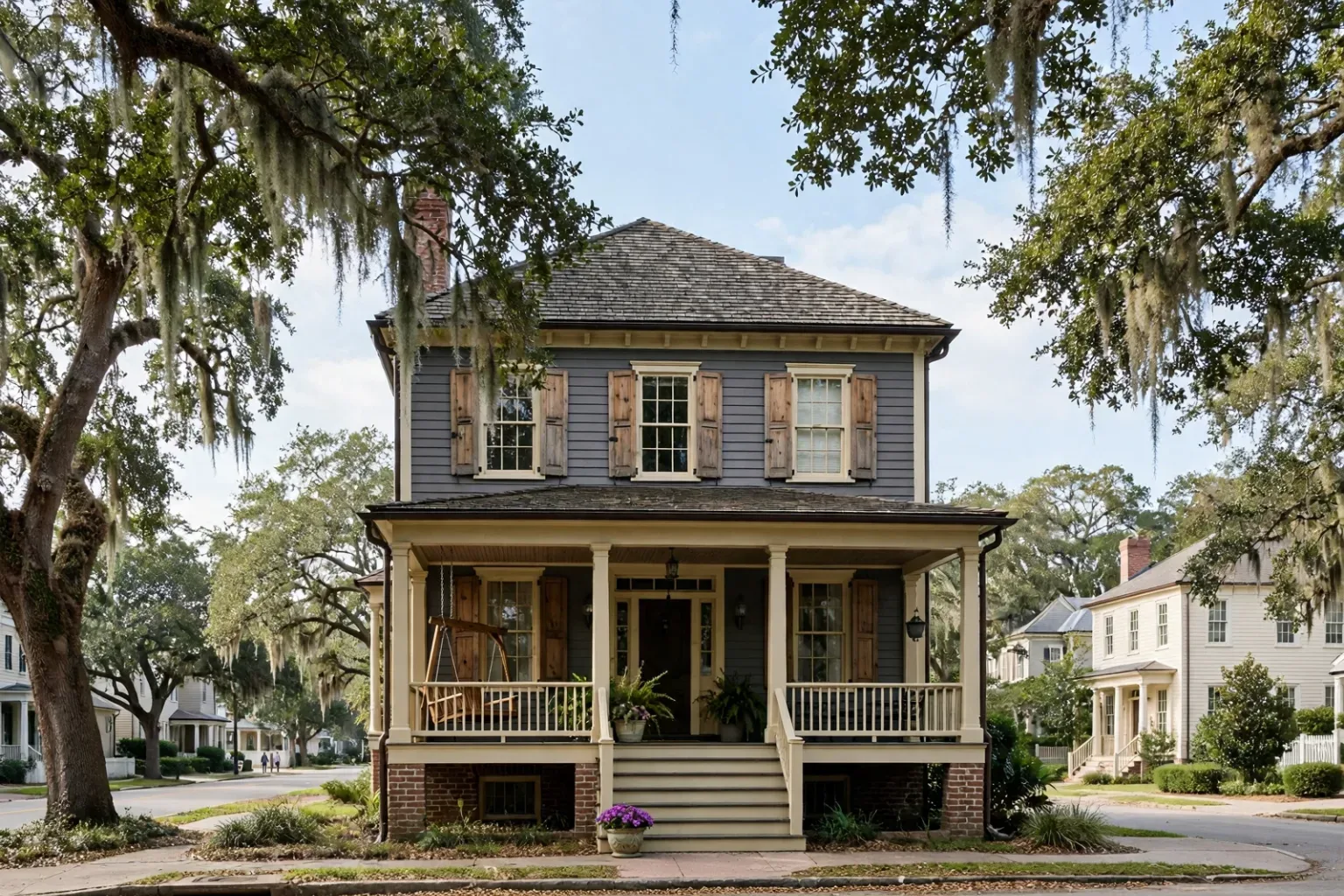
South Carolina has quietly become one of the Sun Belt’s stronger DSCR markets. Charleston’s historic charm and growing biotech/aerospace presence, Greenville’s manufacturing corridor and BMW HQ, Columbia’s state government and University of South Carolina, Myrtle Beach’s vacation-rental economy — each metro offers a different investor thesis, and all operate under South Carolina’s landlord-friendly legal framework. The one complication is the split-rate property tax that treats investor-owned property meaningfully worse than owner-occupied.
This guide covers DSCR lending in South Carolina: the tax structure, the four distinct markets, and the STR opportunity along the coast.
Why Investors Choose South Carolina
South Carolina’s population grew approximately 10% from 2010-2020 and has continued growing. Net in-migration from the Northeast and Midwest is the driver. The Charleston metro added 50,000+ residents from 2015-2023.
Charleston (Charleston, Berkeley, Dorchester counties) — Tourism + Boeing’s 787 final-assembly plant (North Charleston) + Volvo’s US HQ and SUV plant (Ridgeville) + Mercedes-Benz Vans (North Charleston) + growing biotech. Median single-family price in Charleston metro has risen meaningfully, though remains below Raleigh or Nashville.
Greenville (Greenville County) — BMW’s North American manufacturing HQ (Spartanburg nearby), Michelin North America HQ, GE Power, significant automotive supplier cluster. Downtown Greenville has been revitalized dramatically since 2010. The Upstate economy is increasingly Germany-and-France adjacent given the BMW/Michelin anchor.
Columbia (Richland County) — State capital, University of South Carolina (35,000 students), Fort Jackson (Army base). Stable government/education/military economy.
Myrtle Beach (Horry County) — Vacation and retirement economy. Distinct from Charleston or Greenville — more focused on short-term rentals, tourism, and retiree demand. Population has grown faster than most of SC.
Summerville, Mount Pleasant — Charleston suburbs with strong DSCR activity.
DSCR Loan Rules in South Carolina
Every major national DSCR lender funds South Carolina. There are no state-specific DSCR restrictions. South Carolina’s Consumer Finance Law and Mortgage Lending Act govern consumer lending; business-purpose loans to investor LLCs for 1-4 unit property are exempt.
Typical terms: min DSCR 0.75-1.25, max LTV 75%-80% on purchase, 70%-75% on cash-out refi, min FICO 660-680, 6 months reserves.
Taxes & Carrying Costs
South Carolina’s split-rate property tax is the key underwriting variable. Owner-occupied residential (primary residence with homestead exemption) is assessed at 4% of market value. Non-owner-occupied residential (investor rentals) is assessed at 6% of market value. This is a 50% higher assessment base before any homestead exemption considerations.
In practice, an investor-owned $300K rental in Charleston can pay 2-3x what an identical owner-occupied property pays. The statewide effective rate of 0.55% averages both classifications — investor-owned rates are meaningfully higher.
Model the 6% assessment ratio with local millage. Typical investor-owned tax bills:
- Charleston metro: approximately 1.1-1.5% effective on purchase price
- Greenville: approximately 1.0-1.4%
- Columbia: approximately 1.2-1.6%
- Myrtle Beach: approximately 0.9-1.3%
State income tax: graduated 0% to 6.4% in 2026 after reductions (top rate was 7% pre-reform). Out-of-state investors file SC non-resident returns. SC LLCs: $110 online formation, $25 annual report — cheap.
Insurance runs $1,300-$2,200 per $300K inland. Coastal Charleston, Myrtle Beach, and Hilton Head run $2,500-$5,000+ with wind/hurricane exposure. Flood insurance is typically required in coastal FEMA zones.
Foreclosure & Eviction Landscape
South Carolina is a judicial foreclosure state under SC Code Title 29. Process: complaint, answer, default or contested proceeding, Master-in-Equity judgment, sale. Typical timeline 5-9 months uncontested, 9-14 months contested. Faster than many judicial states because SC uses specialized Masters-in-Equity rather than generalist judges for foreclosure.
Eviction in SC runs 14-30 days. Non-payment starts with a 5-day notice to pay or quit. Landlords file ejectment actions in magistrate court. SC is landlord-friendly on eviction timelines.
Landlord-Tenant Law
No rent control. SC Code 27-40 preempts local rent caps. Security deposits not statutorily capped; market practice one month. Landlords have 30 days to return with itemized deductions. SC requires reasonable notice (usually 24 hours) before non-emergency entry. No statewide rental registration.
Charleston and some coastal municipalities have short-term-rental ordinances — primarily permit caps, zoning restrictions, and transient-lodging tax compliance. Verify specific municipality rules before underwriting STR.
Top South Carolina Markets
Charleston / Mount Pleasant / Summerville / North Charleston — The primary DSCR market. Charleston peninsula has historic charm, tight supply, and aggressive pricing. Mount Pleasant is upscale suburban. Summerville and Ladson are more affordable with strong long-term-rental demand from Boeing/Volvo worker base. DSCR properties range $300K-$750K with rents $1,900-$3,500 depending on submarket. Cap rates 5-7%.
Greenville / Spartanburg — Manufacturing corridor. DSCR properties $225K-$400K with rents $1,500-$2,200. Cap rates 6-7.5%. Strong long-term rental demand.
Columbia — State capital + USC. DSCR properties $175K-$275K with rents $1,300-$1,750. Student-housing specialty market available.
Myrtle Beach / Horry County — STR opportunity. Condo DSCR is a specialty category (many DSCR lenders exclude condotels; others specialize in them). Single-family DSCR in the inland Myrtle Beach corridor price $225K-$400K. STR-specific lenders will underwrite to Airbnb revenue.
Hilton Head — Luxury second-home and STR market. High basis.
Entity Formation Notes
SC LLCs cost $110 formation and $25 annually — cheap. Standard structures apply. For multi-state portfolios, Wyoming or Delaware parent holding LLCs owning SC LLCs are common. See the entity structure guide.
Getting Started
Use the DSCR calculator with the 6% assessment rate for investor properties, check current rates, then get matched.
Related guides: North Carolina, Georgia, Florida.