

2026 guide to DSCR loans in Minnesota — prepayment-penalty caps for investors, Twin Cities markets, 6-month judicial foreclosure, and top DSCR lenders for MN investors.
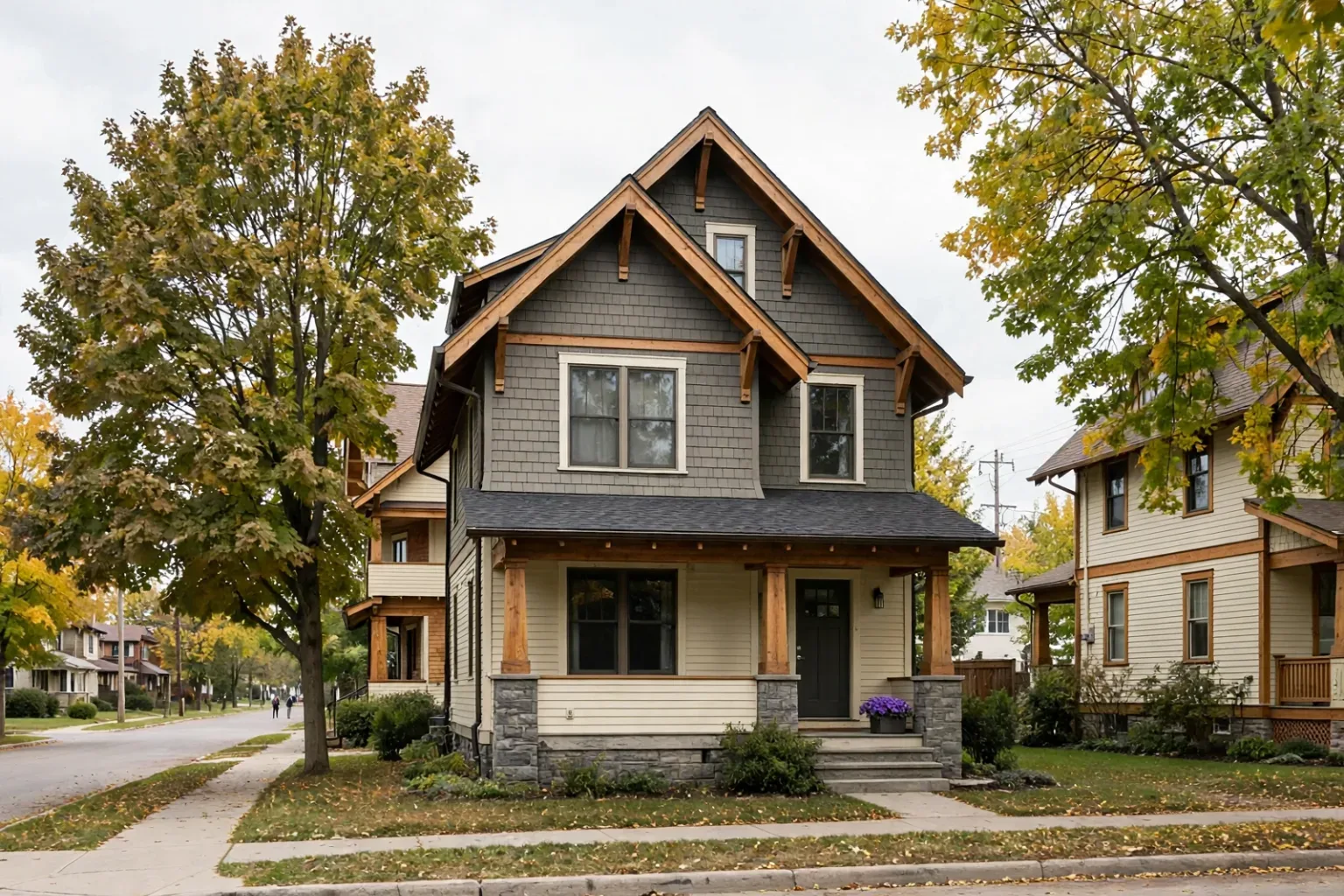
Minnesota is a mid-tier DSCR market with solid urban demand in the Twin Cities, high-quality tenant credit, and a functional investor ecosystem. The tradeoffs are a statute capping prepayment penalties, a 6-month post-foreclosure redemption period that effectively slows the foreclosure clock, and an uncertain rent-control environment in Minneapolis and St. Paul. For disciplined operators, the Twin Cities long-term SFR and 2-4 unit markets are reliable.
This guide covers the Minnesota DSCR environment in 2026: prepayment-penalty caps, foreclosure mechanics, taxes, and the core markets.
Why Investors Choose Minnesota
The Twin Cities (Minneapolis-St. Paul-Bloomington MSA) is a deep, diversified economy — Fortune 500 density (UnitedHealth Group, Target, Best Buy, 3M, Medtronic, US Bancorp), healthcare employment (Mayo Clinic anchors Rochester), and a steady university base (UMN, Carleton, Macalester). Tenant credit quality is high, vacancy is structurally low, and winter doesn’t shrink demand — it concentrates it in well-maintained properties.
The state’s population is older and less-growth-oriented than the Sun Belt, but rental demand is stable and rent collection is strong.
DSCR Loan Rules in Minnesota
Prepayment penalties: capped, and barred on higher-priced loans. Minn. Stat. §58.137 caps prepayment penalties on residential loans at or below the conforming limit, whether or not the owner occupies the property: no penalty on a partial prepayment or on a sale, none after 42 months, and never more than the lesser of 2% of the balance or 60 days’ interest. A first-lien loan priced more than three points above comparable Treasury yields (two for an ARM) can’t carry a PPP at all. The definitions have no owner-occupancy or consumer-purpose test, so business-purpose loans to LLCs are covered; the real exceptions are loans above the conforming limit and federally preempted national banks. Confirm the PPP terms with your lender.
Redemption period. Minnesota’s non-judicial foreclosure process is fast upfront (6-8 weeks notice), but after the sale, the borrower has 6 months of statutory redemption before the lender takes possession. Total effective foreclosure timeline: 8-9 months. Lenders price this in.
Non-QM licensing via MN Department of Commerce. All major national DSCR lenders fund Minnesota.
| Typical Minnesota DSCR Terms, 2026 | Range |
|---|---|
| Minimum DSCR | 1.00 - 1.25 |
| Max LTV (purchase) | 75% - 80% |
| Max LTV (cash-out refi) | 70% - 75% |
| Minimum FICO | 660 - 680 |
| Prepayment penalty | Capped at or below the conforming limit (none after 42 months) |
Taxes & Carrying Costs
State income tax. Graduated, topping at 9.85%. Rental income flows through MN LLC to member’s MN return.
Property tax. Effective rate ~1.12% statewide. Hennepin (Minneapolis) ~1.25%; Ramsey (St. Paul) ~1.30%; suburban Hennepin/Dakota ~1.05%-1.15%. Minnesota levies different rates on “homestead” (owner-occupied) vs. non-homestead; investor property pays the higher non-homestead rate, which typically runs 1.25x the homestead rate on the same parcel.
MN LLC fees. $155 online to form, $0 annual renewal (but must file annually to remain active). No state franchise tax on LLCs.
Insurance. Cold-climate and weather-related premiums are elevated. Ice dam damage, hail (Minnesota is a hail-prone state), and frozen-pipe claims are material. Expect higher premiums than southern states for comparable dwelling value.
Foreclosure & Eviction Landscape
Foreclosure by advertisement (non-judicial). Standard method under Minn. Stat. §580. Process:
- Published notice 6 consecutive weeks
- Sheriff’s sale
- 6-month statutory redemption period (reduced to 5 weeks for abandoned property)
- Total timeline: ~8-9 months typical
Judicial foreclosure is available but slower. The redemption period is the distinguishing MN feature — it’s one of the few states with a long post-sale redemption right.
Eviction. Minnesota has a relatively fast eviction process by Midwest standards. 14-day notice for non-payment (or immediate for breach), filing in housing court, hearing within 1-2 weeks. Total: 14-30 days uncontested.
Landlord-Tenant Law
Rent control situation. Minnesota has no statewide rent control, but both Twin Cities have local rules. St. Paul voters passed a 3% annual cap in 2021; the city substantially amended the ordinance in 2022, adding new-construction exemptions (20-year exemption) and vacancy decontrol, significantly weakening it in practice. Minneapolis voters authorized a rent-control charter amendment in 2021; the City Council has since discussed a 3% cap with an 8% hardship/exception ceiling, though the mechanism has moved slowly. Watch item for investors — verify current ordinance status at closing, and assume St. Paul compliance costs on any covered multifamily.
Security deposits. No statutory cap on amount. Must be returned within 21 days of move-out with itemized deductions; must accrue 1% annual interest.
Late fees. Capped at 8% of past-due rent under Minn. Stat. §504B.177.
Notice to terminate month-to-month. Full rental period (typically one month).
Minnesota is moderately landlord-friendly — cleaner than NY/NJ/MA, more regulated than the Sun Belt.
Top Minnesota Markets
Minneapolis. Urban core, mixed-use infill, condo and 2-4 unit density. Gentrifying North Loop, Northeast, Uptown. Rent control risk (watch item).
St. Paul. Modified rent-cap ordinance in place (3% with exemptions). Summit Hill, Highland Park, West Seventh submarkets. State capitol employment.
Twin Cities suburbs. Bloomington, Richfield, Edina, Plymouth, Minnetonka for upper-middle rentals. Burnsville, Eagan, Woodbury for middle-market SFR.
Rochester. Mayo Clinic anchors 50,000+ employees. Medical-professional rental demand is distinct — mid-term rentals for traveling healthcare workers are a niche DSCR strategy here.
Duluth. Smaller market, seasonal tourism, UMN-Duluth tenant base. Lower entry prices.
Special Considerations
Redemption-period planning. If you take on a MN property with any distress risk, understand that the foreclosure clock effectively runs to 8-9 months. Reserves should be sized accordingly.
St. Paul rent-cap compliance. The 3% cap with exemptions requires tracking each property’s eligibility. New construction and properties added to market in specific windows may be exempt. Confirm with local counsel.
Winter CapEx. Roof and HVAC replacement cycles in Minnesota are shorter than in mild climates. Budget 15-20 year roof cycles rather than 25-30, and HVAC that is tested each fall.
Hail insurance. MN is one of the most hail-prone states. Deductibles on hail coverage are often separate and higher than general perils.
Entity Formation
Form in Minnesota if holding MN property. $155 online, $0 annual renewal but annual filing required. No franchise tax. Single-member LLCs pass-through by default.
Wyoming parent / MN operating LLC works for anonymity. See our entity-structure guide.
How to Get Started
Minnesota DSCR is a capped-PPP, redemption-period-priced market where the lender match comes down to comfort with MN’s slightly longer effective foreclosure timeline and attention to rent-cap status in St. Paul. Our free matching tool at /get-matched routes to MN-active lenders.
Run the DSCR calculator, review the prepayment penalty guide, and compare lenders at /compare/best-dscr-lenders. MN pairs well with higher-yield Midwest markets like Ohio for balanced portfolios.