
2026 Tennessee DSCR market brief: Nashville STR rules, Memphis cash-flow, no state income tax, non-judicial foreclosure, and lender appetite by city.
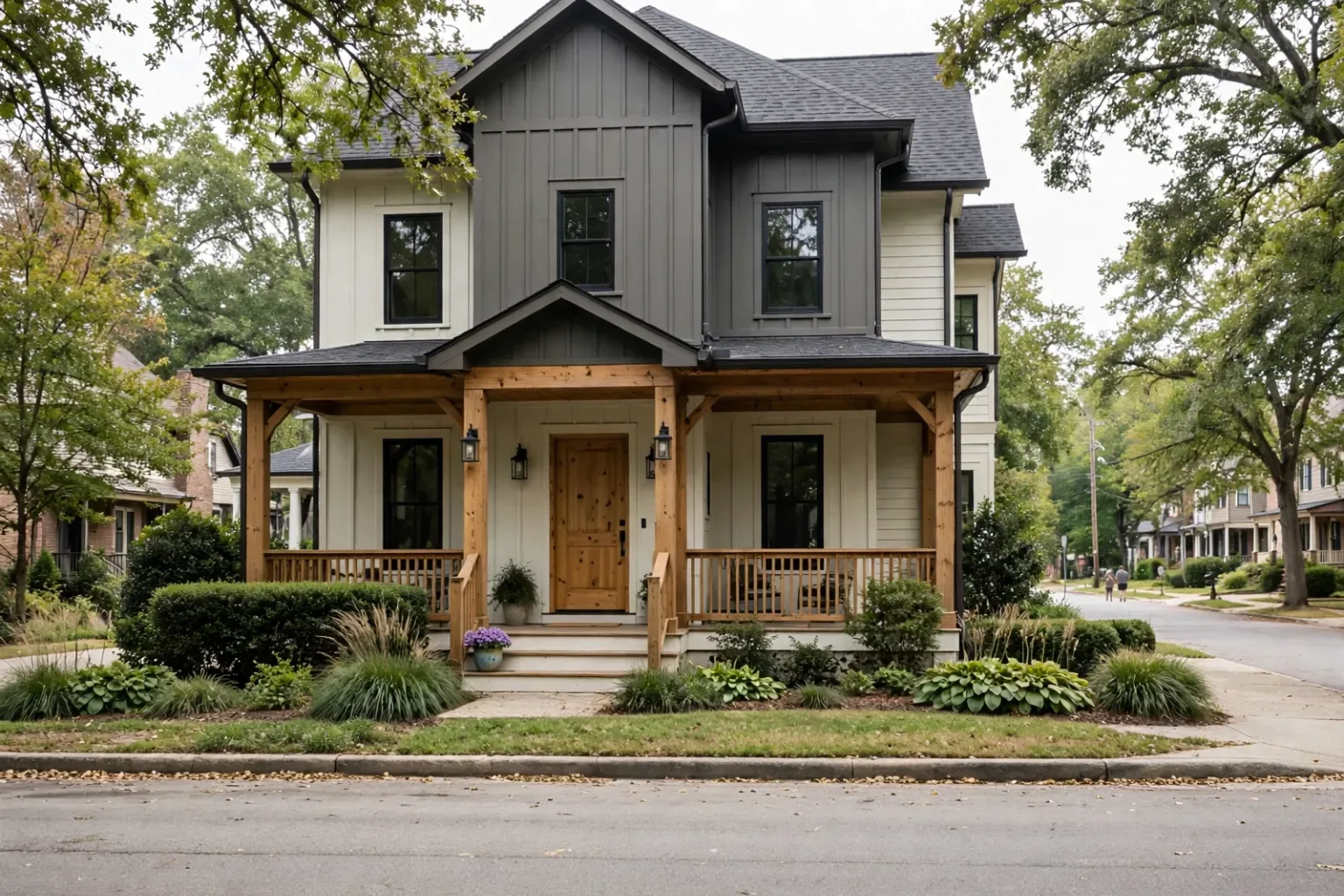
Tennessee doesn’t get the same attention as Texas or Florida in the national DSCR conversation, but it should. The state offers a two-market investment thesis: Nashville’s STR demand for investors focused on short-term income, and Memphis’s cash-flow fundamentals for investors who want DSCR ratios above 1.20 on sub-$150,000 properties. Add no state income tax, non-judicial foreclosure, and relatively low property taxes, and DSCR loan Tennessee underwriting tends to produce favorable coverage ratios compared to most other major markets. Here’s what you need to know city by city.
Tennessee Investment Market Overview
Tennessee’s population grew by approximately 500,000 between 2020 and 2024 (U.S. Census Bureau estimates), with growth concentrated in the Nashville metro and its surrounding counties (Williamson, Rutherford, Wilson, Sumner). Nashville has become a relocation magnet for corporate headquarters, healthcare employment, and music-industry-adjacent workers.
Memphis, Tennessee’s second-largest city, has a different investment profile: slower population growth but stable rental demand from a working-class workforce anchored by logistics, healthcare, and manufacturing. Memphis is consistently ranked among the top 5 cash-flow markets for SFR investors in national surveys because acquisition prices remain below $150,000 in large swaths of investable inventory.
Tennessee tax structure is a significant DSCR advantage. The state eliminated its Hall Income Tax (on investment income) in 2021 and has no state income tax. Rental income, capital gains, and partnership distributions are not taxed at the state level. Property taxes are assessed locally and typically run 0.6–0.9% of assessed value — materially lower than Texas (2.0–2.8%) or Illinois (2.0–2.5%).
Our Tennessee DSCR deal flow spans from roughly $75,000 (Memphis SFR) to $600,000 (Nashville STR), with the median around $190,000. The bimodal distribution reflects the two distinct markets we work in the state.
Top Tennessee Cities: Cash Flow vs. STR vs. Appreciation
Nashville
Nashville is Tennessee’s highest-profile investor market and the state’s most active STR DSCR destination. The metro’s growth — fueled by healthcare (HCA Healthcare, Vanderbilt University Medical Center), corporate relocations (Amazon, Oracle), and entertainment — has sustained both long-term and short-term rental demand through significant construction cycles.
Long-term rental profile: Nashville SFRs in investor-accessible price ranges ($300,000–$450,000 in Davidson County) rent for $2,000–$2,600/month. At those price points, DSCR on long-term rental deals is tight — typically 0.95–1.10 at 75% LTV depending on submarket and current rates. The DSCR math is more favorable in outlying counties: Murfreesboro, Smyrna, and La Vergne offer $200,000–$280,000 acquisitions with rents of $1,600–$1,950.
STR profile: Nashville’s STR market is driven by bachelorette parties, live music tourism (Broadway district), and corporate visitors. Properties within 5 miles of downtown, particularly in East Nashville, The Gulch, and Nations neighborhoods, achieve AirDNA gross revenues of $3,500–$5,500/month. At those revenue levels, STR DSCR underwriting can produce ratios above 1.30 even at Nashville price points.
Investor strategy: Nashville long-term rental is best in the outlying counties for cash-flow math. Nashville STR is best in urban core neighborhoods where AirDNA data is robust — subject to permit verification (see regulation section below).
Memphis
Memphis is the Tennessee market investors should be paying more attention to. In the $80,000–$150,000 acquisition range, Memphis SFRs routinely generate $900–$1,250/month in rent. The math at that rent-to-price ratio produces DSCR ratios that clear even conservative lender requirements with significant margin.
Submarket breakdown:
- Cordova/Germantown corridors (Shelby County suburbs): Higher acquisition prices ($150,000–$250,000) but institutional-quality tenants and lower vacancy. Better for investors prioritizing stability.
- South Memphis and Whitehaven: Lower acquisition prices ($70,000–$120,000), higher yields, higher tenant credit risk, and Section 8 concentration. These submarkets require experienced property management.
- Midtown Memphis: Emerging appreciation play with STR activity (close to medical district and Overton Park). Prices $120,000–$200,000 with improving trajectory.
DSCR profile: Memphis’s low acquisition prices mean even modest rents generate strong DSCR. Section 8 HAP contract income is accepted by most mainstream DSCR lenders and eliminates vacancy risk during the rental period — a meaningful underwriting advantage in high-Section-8 submarkets.
Investor strategy: Cash-flow primary. Section 8 density makes Memphis attractive for investors who want HAP contract income certainty. See our Section 8 DSCR guide for how HAP contracts affect underwriting.
Knoxville
Knoxville offers a middle ground between Nashville’s appreciation-forward market and Memphis’s cash-flow profile. University of Tennessee creates rental demand in the Fort Sanders and Bearden neighborhoods. Long-term SFR rents run $1,200–$1,700 on acquisition prices of $150,000–$250,000 in established investor areas.
DSCR profile: Moderate. DSCR ratios of 1.05–1.20 are achievable at standard 75% LTV. The university rental market introduces some seasonal vacancy risk that DSCR lenders factor in — confirm which lenders accept student housing DSCR underwriting.
STR profile: Limited within Knoxville proper. Sevier County (Gatlinburg, Pigeon Forge, Sevierville) is the regional STR hotspot — see below.
Smoky Mountains/Sevier County STR: This is a specialized submarket worth noting. Cabin rentals in Sevier County gross $4,000–$9,000/month on AirDNA data, with high seasonal concentration in spring/fall leaf season. Lenders working this submarket apply seasonal haircuts to AirDNA projections. Several DSCR lenders have active cabin/vacation property programs that work in Sevier County.
Chattanooga
Chattanooga is the most interesting emerging market in Tennessee from a DSCR standpoint. The city has received significant attention for its gigabit internet infrastructure (Chattanooga was among the first US cities with citywide fiber) and has attracted technology employers and remote workers. The outdoor recreation economy (Tennessee River, Lookout Mountain, climbing, mountain biking) supports a growing STR market.
DSCR profile: Acquisition prices in Chattanooga for investor-grade SFRs run $150,000–$250,000 with rents of $1,200–$1,700. DSCR ratios are comparable to Knoxville — 1.05–1.25 range on standard long-term rental underwriting.
STR profile: STR near the North Shore, Southside, and near outdoor recreation access points can produce AirDNA projections of $2,500–$3,500/month on smaller (2-3 bed) properties. Hamilton County has been relatively permissive with STR so far.
Investor strategy: Appreciation + STR hybrid for early-stage investors; cash-flow viable but less dramatically so than Memphis.
Tennessee Landlord-Tenant Law
Tennessee’s landlord-tenant framework is generally landlord-friendly, though the state enacted the Uniform Residential Landlord and Tenant Act (URLTA) which applies in counties with populations over 75,000 (all major metros).
Eviction timeline: For nonpayment of rent, Tennessee requires 14 days written notice (in URLTA counties; shorter outside URLTA). After notice, the landlord files a detainer warrant in General Sessions Court. A hearing is typically scheduled 6–15 days after filing. If the tenant doesn’t appear or loses, a writ of possession is issued within a few days. Total timeline: 3–6 weeks in an uncontested case. Contested evictions in Davidson or Shelby County can run 8–14 weeks.
Security deposit limits: Tennessee does not cap security deposits (Tennessee Code §66-28-301). Any amount agreed to in the lease is enforceable. Deposits must be held in a separate account, and landlords must return within 30 days of lease termination with an itemized statement if deductions are made.
Rent control: Tennessee has no state rent control. State law does not explicitly preempt local rent control (unlike Texas and Florida), but no Tennessee city has enacted it. Nashville and Memphis have discussed tenant protections but have not moved to rent control.
Non-judicial foreclosure: Tennessee uses trust deed foreclosure, which does not require court action. Lenders must publish notice of the foreclosure sale for three consecutive weeks in a local newspaper and provide 20 days minimum notice (Tennessee Code §35-5-101). Total timeline from default to completed sale typically runs 2–4 months — faster than judicial foreclosure states and a positive factor for DSCR lender appetite.
Tennessee STR Regulation
Nashville/Davidson County: Nashville’s STR ordinance distinguishes between:
- Owner-occupied (Type 1) STR: Permitted with registration in most zones. Relatively straightforward process.
- Non-owner-occupied (Type 2) STR: Subject to a permit cap in Urban Zoning Overlay (UZO) districts, which include most of Davidson County’s desirable STR neighborhoods. The UZO cap has been reached in several areas, creating a waitlist. Investors must verify permit availability before contracting on Nashville STR deals. Purchasing a property without a transferable Type 2 permit in a capped area means the property may be unable to operate as STR legally.
That decision sits inside our DSCR Loans by State hub, where DSCR Authority maps program fit and what investors usually prep before booking a strategy call.
That decision sits inside our DSCR Loans by State hub, where DSCR Authority maps program fit and what investors usually prep before booking a strategy call.
That decision sits inside our DSCR Loans by State hub, where DSCR Authority maps program fit and what investors usually prep before booking a strategy call.
That decision sits inside our DSCR Loans by State hub, where DSCR Authority maps program fit and what investors usually prep before booking a strategy call.
That decision sits inside our DSCR Loans by State hub, where DSCR Authority maps program fit and what investors usually prep before booking a strategy call.
That decision sits inside our DSCR Loans by State hub, where DSCR Authority maps program fit and what investors usually prep before booking a strategy call.
That decision sits inside our DSCR Loans by State hub, where DSCR Authority maps program fit and what investors usually prep before booking a strategy call.
That decision sits inside our DSCR Loans by State hub, where DSCR Authority maps program fit and what investors usually prep before booking a strategy call.
That decision sits inside our DSCR Authority Blog hub, where DSCR Authority maps program fit and what investors usually prep before booking a strategy call.
Memphis/Shelby County: Memphis requires STR registration and tax collection but does not have hard permit caps as of early 2026. Reasonably permissive framework for investor-owned STR.
Knoxville: Requires registration. No cap on permits. Permissive.
Chattanooga/Hamilton County: Requires registration. Hamilton County has been generally permissive. Verify current ordinance status — this changes.
Sevier County (Gatlinburg/Pigeon Forge): The most active rural STR submarket in Tennessee. Registration required, no cap on permits. The county’s economy is largely built on vacation rentals, making regulation relatively permissive. Lenders who work Sevier County STR understand the seasonal profile.
Tennessee Insurance Dynamics
Tennessee does not have the catastrophic insurance market disruption seen in Florida or California. Property insurance for most Tennessee markets is available through standard private carriers at reasonable rates.
Key considerations:
- Tornado risk: Middle Tennessee (Nashville, Murfreesboro) sits in a tornado-prone corridor. Lenders require wind coverage as part of standard homeowner’s/landlord policies. Wind coverage is typically included in standard policies, not a separate endorsement, unlike Florida’s separate windstorm insurance requirement.
- Flood zones: Portions of Memphis (along the Mississippi River and Loosahatchee River floodplain) and Chattanooga (near the Tennessee River) carry NFIP flood insurance requirements for FEMA Zone A and AE properties. Most Nashville investor submarkets are outside major flood zones.
- Cost range: Annual premiums for a typical Tennessee SFR run $1,200–$2,200 — significantly lower than Florida. This lower insurance cost contributes to Tennessee’s favorable DSCR ratios compared to Florida.
Tennessee Investor? Book a Strategy Call to Map Your Deal
Whether it's a Nashville STR permit question or a Memphis cash-flow scenario, we'll match you to the right DSCR lender in 24 hours.
Tennessee Prepayment Penalty Rules
Tennessee has no state law restricting prepayment penalties on investment property loans. DSCR loans are non-QM products, and PPP terms are governed by the loan agreement.
Standard Tennessee DSCR deals offer 3-year or 5-year step-down prepayment penalties. For Nashville STR investors with high AirDNA income projections and a defined 5+ year hold strategy, taking a 5-year PPP in exchange for a lower rate (typically 0.35–0.50% lower) is the better long-term math. Memphis cash-flow investors planning to hold for 10+ years should strongly consider locking in lower rates with a longer PPP structure.
Watch for: Some lenders have geographic overlays on PPP structures for Tennessee STR — particularly for Sevier County cabin rentals, which some lenders treat as a higher-risk STR subtype. If you’re buying a cabin in the Smoky Mountains, verify your PPP options specifically rather than assuming standard terms apply.
Lender Appetite Snapshot
Tennessee is a well-regarded DSCR market with broad lender participation, particularly for the cash-flow SFR segment.
| Lender Stance | Min Loan | Max LTV | Rate Range | Notes |
|---|---|---|---|---|
| Aggressive (TN-friendly, Section 8 accepted) | $75,000 | 80% | ~6.25–6.85% | 0.75 DSCR min, accepts HAP contracts, Memphis submarket approved |
| Mainstream (standard DSCR) | $100,000 | 75–80% | ~6.50–7.10% | 1.0 DSCR min, 660 FICO, 6 months reserves |
| Conservative (min loan restrictions) | $150,000 | 70–75% | ~6.75–7.25% | 720 FICO, excludes sub-$100K deals |
| STR-specialist (Nashville + Sevier County) | $100,000 | 75% | ~6.75–7.50% | AirDNA underwriting, Nashville permit verification required, 700 FICO |
| No-ratio programs | $125,000 | 70–75% | ~7.25–7.85% | 720 FICO, 12 months reserves |
Minimum loan sizes are particularly important in Memphis, where a significant inventory of investor-grade properties falls below $100,000. Lenders with $150,000 minimums can’t serve the bulk of the Memphis market. We work with lenders who go to $75,000 on Tennessee SFR. Rate ranges are illustrative (mortgage-info.com, August 2026).
Worked Example: Memphis Cash-Flow SFR
Scenario: 3-bedroom SFR in Cordova/Germantown corridor, Shelby County. Purchase price $130,000. Section 8 HAP tenant.
| Item | Monthly | Annual |
|---|---|---|
| HAP contract rent (Shelby County FMR 3BR, 2026) | $1,175 | $14,100 |
| Loan: 75% LTV ($97,500 at 6.75%, 30yr) | $632 | $7,584 |
| Property tax (Shelby County ~0.9% of assessed) | $98 | $1,170 |
| Insurance (standard landlord policy) | $120 | $1,440 |
| Total PITIA | $850 | $10,194 |
| DSCR = $1,175 / $850 | = 1.38 | — |
At 1.38 DSCR, this deal comfortably clears all mainstream lenders and many conservative programs. The HAP contract eliminates vacancy risk during the tenancy — lenders who accept Section 8 income treat this as superior payment certainty compared to market-rate tenants.
If lender uses market rent instead of HAP contract: Market rent for a comparable 3BR in this Shelby County submarket is $1,050–$1,150/month, so the HAP contract actually reflects below-market payment in this case. Still DSCR-positive either way. On Memphis properties where HAP exceeds market rent, confirm your lender accepts HAP contract income at face value before modeling.
Common Mistakes Tennessee Investors Make
Not verifying Nashville Type 2 STR permit availability before contracting. This is the single most costly mistake in the Nashville STR market. Investors who close on a Davidson County property in a UZO district without a transferable Type 2 permit can find themselves operating illegally or forced to long-term rent a property they underwrote as STR.
Using national insurance averages for Tennessee deals. Tennessee insurance is materially cheaper than Florida or coastal markets, and investors from those markets sometimes under-appreciate how much the lower insurance cost improves Tennessee DSCR ratios. Run the actual quote — it’s a positive surprise.
Assuming Memphis minimum loan sizes are uniform. Many national DSCR lenders have $150,000 minimum loan amounts. The Memphis market is built on $75,000–$130,000 acquisitions. Investors applying to lenders with high minimums will be declined on deal size alone — before any underwriting. Work with a broker who specifically covers sub-$100,000 DSCR programs.
Underwriting Sevier County STR without seasonal adjustment. Smoky Mountain cabin STR revenue is heavily weighted toward spring and fall (leaf season), with slower winters and summers. AirDNA annual averages can be misleading if you’re looking at peak-season projections. Apply a 10–15% haircut to the AirDNA 12-month average for conservative DSCR modeling.
Ignoring non-judicial foreclosure advantages in lender selection. Tennessee’s 2–4 month non-judicial foreclosure timeline is a lender risk-reduction feature that makes Tennessee deals attractive to lenders who price slower-state overlays (like Florida and New York). When shopping lenders, Tennessee’s foreclosure environment is a legitimate negotiating point.
Closing: Tennessee DSCR Loans
Tennessee’s two-market structure — Nashville STR and Memphis cash-flow — means every deal starts with the question of which thesis you’re executing. The lender, the underwriting model, and the city-specific regulatory overlay are all different depending on your answer. Getting both elements right — the deal and the lender — is where working with a specialist pays off.
If you’re ready to evaluate a Tennessee deal, book a strategy call with our team. We’ll walk through the DSCR model, the permit question if you’re buying Nashville STR, and match you to the specific lender programs that work for your deal size and property type.