
Complete 2026 guide to DSCR loans in Atlanta — cap rates, non-judicial foreclosure advantage, best cash-flow neighborhoods, property tax, insurance, and the best DSCR lenders for Atlanta investors.
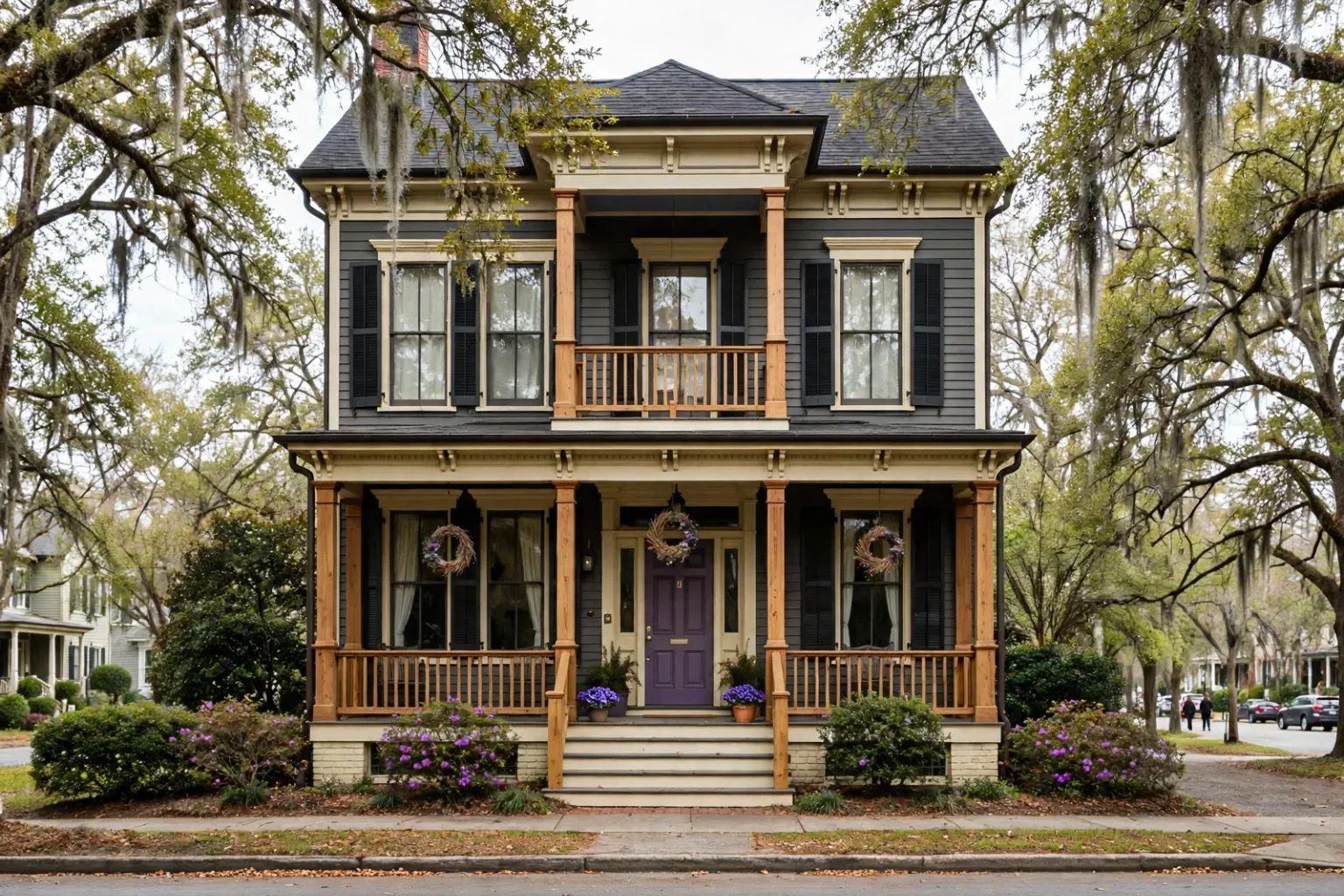
Atlanta is the economic and cultural capital of the Southeast. Delta Air Lines, Coca-Cola, Home Depot, CNN, Georgia-Pacific, Georgia Tech, Emory Healthcare, and a growing film and television production industry create stable, diversified rental demand across a wide price spectrum. For DSCR investors, Atlanta combines non-judicial foreclosure efficiency (among the fastest in the US), no rent control anywhere in the state, and accessible price points in the suburban ring.
Why Investors Choose Atlanta
Atlanta’s non-judicial foreclosure process is one of the most lender-favorable in the country. A Georgia deed-of-trust can be foreclosed in approximately 30–45 days from the first notice — faster than Texas, dramatically faster than Florida or New York. This efficiency is priced into Georgia DSCR rate sheets: lenders take less tail risk here and pass savings to borrowers.
The metro’s I-285 perimeter highway defines Atlanta’s investment geography. Inside the perimeter (ITP) commands appreciation premiums; outside the perimeter (OTP) delivers better cash flow. Investors who understand which side of 285 they’re buying on — and why — capture substantially different risk/return profiles.
DSCR Loan Availability in Atlanta
All major national DSCR lenders fund Atlanta. Georgia allows prepayment penalties on investment loans, so the standard 5/4/3/2/1 PPP step-down is available and typically required to access the lowest rate tier.
| Typical Atlanta DSCR Terms, 2026 | Range |
|---|---|
| Minimum DSCR | 0.75 – 1.25 |
| Max LTV (purchase, SFR) | 75% – 80% |
| Max LTV (cash-out) | 70% – 75% |
| Minimum FICO | 620 – 680 |
| Prepayment penalty | 5/4/3/2/1 standard |
| STR income | Yes, 12mo statements or AirDNA |
Cap Rates and Neighborhood Cash Flow
2026 rental market context: Metro Atlanta average effective rents are approximately $1,773/month as of Q1 2026, up a modest 0.63% year-over-year — reflecting a rental market absorbing elevated multifamily completions. Metro vacancy for multifamily runs 7–8%, with higher vacancy pockets in submarkets with heavy new supply. SFR rents are firmer than apartment rents in most corridors. The medianRent figure for this guide reflects SFR/2-4 unit market rates, not the broader apartment average.
Atlanta’s geographic diversity means investment thesis varies dramatically by location:
Intown Atlanta (Midtown, Virginia-Highland, Kirkwood, Edgewood): Premium SFR and condos, $450K–$900K, rents $2,500–$4,500. Appreciation play, BeltLine access premium. Cap rates 3.5%–4.5%.
East Point / College Park / Hapeville (Southwest perimeter): Hartsfield-Jackson Airport corridor, workforce housing, $150K–$260K SFR, $1,400–$1,900 rents. Cap rates 7.0%–9.0%. Massive logistics employment anchor.
South DeKalb (Lithonia, Stonecrest, Decatur suburbs): Mid-market SFR, $210K–$320K, rents $1,600–$2,200. Growing demand from I-20 east corridor employers. Cap rates 5.5%–7.5%.
Clayton County (Forest Park, Jonesboro, Lake City): Highest cap rate zone in the metro, $130K–$220K SFR, rents $1,200–$1,700. Deep value market, requires active management. Cap rates 7.5%–10%+.
Gwinnett County (Lawrenceville, Buford, Norcross): Northeast Atlanta’s most diverse workforce housing market. Growing immigrant-family rental demand, $270K–$400K SFR, rents $1,900–$2,500. Cap rates 5.0%–6.5%.
Cobb County (Marietta, Smyrna, Kennesaw): Northwest suburban, SFR $300K–$480K, rents $1,900–$2,700. Dobbins Air Reserve Base employment, strong tenant quality. Cap rates 4.5%–5.5%.
BeltLine Corridors (Reynoldstown, Grant Park, West End): Artisan SFR and duplex $400K–$700K, rents $2,400–$3,800. Strong mid-term/corporate rental demand from film industry workers. Cap rates 4.0%–5.5%.
STR Regulation in Atlanta
City of Atlanta STR regulations (passed 2021):
- All STR operators must register with the City of Atlanta and pay annual fees
- Owner-occupied STRs and investor-owned STRs are treated similarly at the registration level
- Neighborhoods with HOAs may have separate restrictions
- Active enforcement since 2023; unlicensed properties flagged on Airbnb by city monitors
The Atlanta STR market is active in Midtown, Old Fourth Ward, and the Buckhead area. DSCR lenders require active registration for STR income qualification.
Property Tax
Fulton County effective property tax: approximately 1.0%–1.5% of assessed value. DeKalb County runs slightly higher at 1.1%–1.6%. Clayton County is lower at 0.9%–1.2%. Properties reassess at market at sale; expect the Year 1 bill to jump 30%–50% from a longtime owner’s basis.
Georgia also has a homestead exemption for owner-occupied properties — investor-owned properties do not qualify. Always model the non-homestead bill.
Insurance
Atlanta insurance costs are favorable by Southeast standards:
- Hazard: $2,000–$4,500/year on a $350K SFR in standard Metro Atlanta locations
- Wind/hail: Some Fulton/DeKalb ZIP codes have elevated hail frequency — premiums have risen 10%–20% since 2022
- Flood: Most Atlanta properties are outside flood zones; notable exceptions near the Chattahoochee River and some creek corridors
Low insurance cost relative to Florida markets is a meaningful tailwind for Atlanta DSCR ratios.
Best DSCR Lenders for Atlanta
- Kiavi — highest Georgia volume, particularly strong on SFR BRRRR in the OTP corridors
- Lima One Capital — Atlanta BRRRR specialist, very active in Southwest Atlanta and Clayton County
- LendingOne — strong on standard SFR and 2-4 unit, efficient close process
- Easy Street Capital — STR program, active on BeltLine-adjacent and Midtown STR files
- CoreVest — portfolio blanket loans, good for investors with 5+ Atlanta properties
- Visio Lending — portfolio SFR program, good for accumulating OTP rentals
Get current Atlanta-specific term sheets via get matched.
Getting Started
Atlanta is one of the most DSCR-lender-competitive cities in the country — the difference between a well-matched lender and the wrong one is commonly 0.50%–1.00% plus PPP structure variance. Start with the DSCR calculator and model the actual Fulton/DeKalb/Gwinnett County tax estimate. For BRRRR, use the BRRRR modeler. Then get matched for Atlanta-active competitive bids.