State guide · WV
DSCR Loans in West Virginia: 2026 Investor's Guide
2026 guide to DSCR loans in West Virginia — sub-$150K entry prices, 30-90 day non-judicial foreclosure, Charleston/Morgantown, and 0.58% property tax.
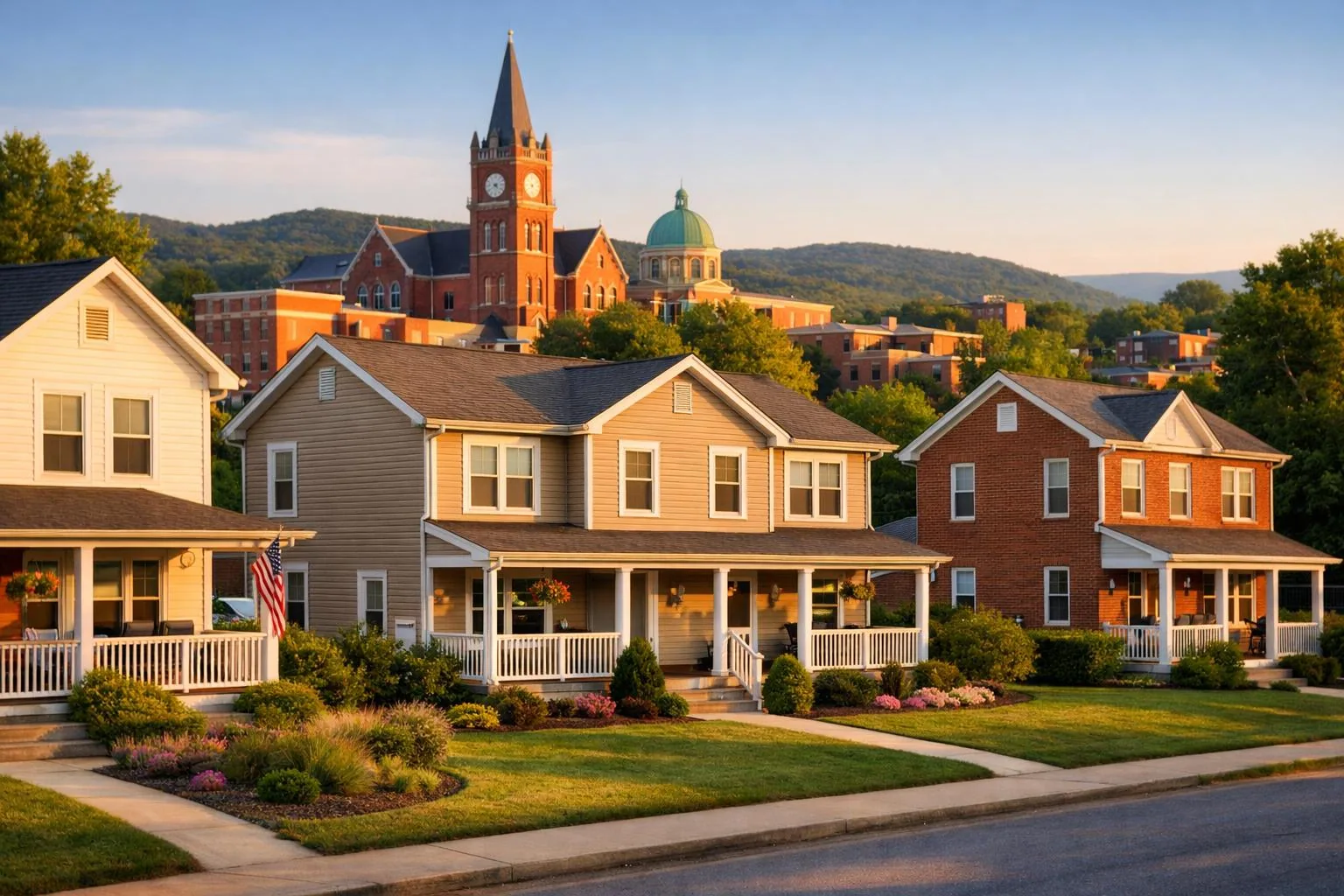
West Virginia is a pure cash-flow DSCR state. Low acquisition basis, fast non-judicial foreclosure, landlord-friendly eviction, low property taxes, and two genuine metros in Charleston and Morgantown. Population is declining — West Virginia has lost residents most decades since 1950 — which is a real long-term bear case. But for investors focused on yield rather than appreciation, WV delivers some of the highest cap rates in the Eastern US.
This guide walks through DSCR lending in West Virginia: where to buy, how to model it, and the population-decline risk to manage.
Why Investors Choose West Virginia
The cap-rate math. A 3-bed/2-bath rental in Charleston, West Virginia commonly acquires at $120K-$175K and rents $1,000-$1,400. Cap rates of 9-12% are routine. Morgantown trades at higher basis (WVU plus medical corridor drives demand) but still delivers 7-9% cap rates.
The employer base is concentrated. Charleston has state government and West Virginia University Health System / Charleston Area Medical Center. Morgantown has WVU (largest employer in the state) and the West Virginia University Medicine system. Huntington has Marshall University and Cabell Huntington Hospital. Parkersburg, Wheeling, and Martinsburg are smaller markets.
The macro risk is real: West Virginia’s population has been declining for decades. County-level declines in coal-country counties can be severe. Focus DSCR investing on the university-and-healthcare anchor cities (Charleston, Morgantown, Huntington) rather than the resource-extraction corners.
DSCR Loan Rules in West Virginia
Most major national DSCR lenders fund West Virginia. Some smaller DSCR shops exclude WV. There are no state-specific DSCR restrictions.
Typical terms: min DSCR 0.85-1.25, max LTV 70-75%, min FICO 680-700, 6-9 months reserves. Some lenders apply WV-specific overlays for smaller towns (minimum property value $75K-$100K).
Taxes & Carrying Costs
WV effective property tax rate is 0.59% — among the 10 lowest. Assessment is at 60% of market value. WV divides property into four classes: Class 1 (farm intangibles — mostly historical), Class 2 (owner-occupied residential), Class 3 (non-owner-occupied residential outside municipality), Class 4 (non-owner-occupied residential within municipality). Class 3 and Class 4 are taxed at higher rates than Class 2 — investor rentals pay the Class 3 or Class 4 rate depending on whether the property is in a municipality or unincorporated county.
A $150K WV rental typically carries $1,000-$1,500 in annual property tax.
State income tax: graduated 2.36% to 5.12% in 2026 after reductions. Out-of-state investors file WV non-resident returns. WV LLCs: $100 formation, $25 annual report + $26 business-registration fee.
Insurance in WV is moderate — $900-$1,400 per $300K. Flood-zone properties along the Kanawha and Ohio Rivers require flood insurance.
Foreclosure & Eviction Landscape
West Virginia is a non-judicial foreclosure state. Trustee-sale foreclosure under WV Code 38-1-3 requires statutory notice and publication. Typical timeline: 60-90 days — among the fastest in the country.
Eviction in WV runs 14-30 days. Non-payment starts with a notice to pay or vacate (typically 5-10 days per common practice). Landlords file unlawful-detainer in magistrate court. WV is landlord-friendly.
Landlord-Tenant Law
No rent control. Security deposits not statutorily capped; market practice is one month. Landlords have 60 days to return the deposit with itemized deductions. WV requires reasonable notice before non-emergency entry.
Top West Virginia Markets
Charleston (Kanawha County) — State capital. Healthcare and government. DSCR properties $110K-$175K with rents $950-$1,300. Cap rates 9-12%.
Morgantown (Monongalia County) — WVU + WVU Medicine. Strongest DSCR market in WV with the most durable demand. DSCR properties $175K-$275K with rents $1,400-$1,900.
Huntington (Cabell County) — Marshall University + Cabell Huntington Hospital. DSCR properties $100K-$160K with rents $850-$1,200.
Parkersburg (Wood County) — Ohio River. Chemical manufacturing + small-city economy. Lower basis.
Wheeling (Ohio County) — Northern panhandle. Proximity to Pittsburgh commuter range. DSCR properties $80K-$140K with rents $700-$1,100. Cap rates can exceed 10% but tenant-quality and property-condition diligence are critical.
Martinsburg / Eastern Panhandle (Berkeley and Jefferson counties) — Washington DC-adjacent. This is a different market than the rest of West Virginia — commuter rail service to DC plus federal-contractor spillover from Loudoun County, Virginia creates sustained demand. DSCR properties $225K-$350K with rents $1,600-$2,100. Cap rates 5.5-7% — lower than the rest of WV but more durable demand.
Special Considerations
Population decline is the macro risk. Focus on university-and-healthcare-anchored metros. Smaller towns (under 10,000 population) typically lack both investor-quality property management and lender appetite; stay in the primary metros — Charleston, Morgantown, Huntington, and the Eastern Panhandle.
Appalachian housing stock is often older than the Southeast average. Many 1900-1940 brick and frame houses still dominate Charleston and Huntington inventory. Budget for updates — electrical systems (knob-and-tube wiring in older stock), plumbing, and roofing are routine capital expenses. Lenders may require specific updates before clear-to-close.
Flooding exposure along the Kanawha, Ohio, and tributary river valleys is real. West Virginia has experienced several major flood events in the past 10 years, including 2016 and 2023. Verify FEMA flood-zone classification before closing and budget for flood insurance separately if in a mapped zone.
Coal-mining legacy issues — some WV properties have mine-subsidence exposure or acid-mine-drainage history. A pre-close environmental disclosure review is advisable for properties in legacy mining counties, though less relevant in Charleston, Morgantown, Huntington, or Eastern Panhandle proper.
Eastern Panhandle is a different market. The Martinsburg-Charles Town corridor benefits from DC-metro commuter demand (MARC rail service to DC) and federal-contractor spillover. Rental economics there look more like Virginia than West Virginia. If you’re focused on appreciation-plus-cash-flow rather than pure yield, the Eastern Panhandle is where WV earns a look in the diversified portfolio.
Entity Formation Notes
WV LLCs cost $100 formation, $25 annual + $26 business-registration fee. Standard structures apply. Many investors use Wyoming or Delaware parent holding LLCs owning WV LLCs. See the entity structure guide.
Getting Started
Use the DSCR calculator, check current rates, then get matched.
Related guides: Virginia, Ohio, Pennsylvania.
Keep exploring
Hand-picked next steps — whether you want to go deeper on this topic, compare alternatives, or run the numbers.
Editor's picks
Hand-chosen follow-ups for this topic.
- Guide
What Is a DSCR Loan? The Complete 2026 Guide for Real Estate Investors
A DSCR loan qualifies a rental property on rental income ÷ PITIA — not personal income or tax returns. Full 2026 guide to ratios,…
- Guide
DSCR Loan LLC Guide: Entity Structure, Vesting & Personal Guarantees
DSCR loan LLC guide: single-member, multi-member, S-Corp, trusts, personal guarantees, state selection, and lender requirements —…
- Investor profile
BRRRR + DSCR Strategy Guide: Buy, Rehab, Rent, Refinance, Repeat Financing
The BRRRR + DSCR refinance playbook: seasoning by lender, ARV appraisals, capital recycling math, and refinance mechanics that…
- Property type
DSCR Loan for Single-Family Rental (SFR): 2026 Investor Guide
DSCR loan for single-family rentals in 2026: 80% LTV, 0.75+ DSCR, baseline pricing, and the exact SFR lender landscape to shop…
- Guide
DSCR Loan Risks: What Investors Need to Know Before Signing in 2026
DSCR loan risks: ARM rate resets, prepayment traps, insurance spikes, refinance risk, personal guarantees. Honest risk analysis…
Compare other states
DSCR rules, rates, and tax posture in similar markets.
- State guide
DSCR Loans in Alabama
Complete 2026 guide to DSCR loans in Alabama — rates, non-judicial foreclosure rules, Birmingham and Huntsville markets, and how…
- State guide
DSCR Loans in Alaska
2026 guide to DSCR loans in Alaska — small lender pool, no state income tax, Anchorage and Fairbanks markets, and typical…
- State guide
DSCR Loans in Arkansas
2026 guide to DSCR loans in Arkansas — low property taxes, non-judicial foreclosure, Little Rock and Northwest Arkansas markets,…
- State guide
DSCR Loans in California
Complete 2026 guide to DSCR loans in California — AB1482 rent control, Prop 13 reassessment, $800 LLC tax, LA/SF/San Diego…
DSCR loan products for your next deal
The financing structures investors use most in this market.
- Loan type
DSCR Purchase Loan: Complete 2026 Guide for Investors
Everything real estate investors need to know about using a DSCR purchase loan — LTV limits, rent schedule requirements, closing…
- Loan type
DSCR Cash-Out Refinance: 2026 Playbook for Investors
DSCR cash-out refinance 2026: LTV limits, seasoning rules, tax impact, delayed financing, and when the math actually pencils —…
- Loan type
DSCR Rate-and-Term Refinance: Can You Refinance a DSCR Loan? (2026)
Yes — you can refinance a DSCR loan with rate-and-term or cash-out. Seasoning (often 3–6 months), LTV, DSCR floors, PPP costs,…
Property types investors finance here
- Property type
DSCR Loan for 2-4 Unit Properties: Duplex, Triplex & Quadplex Guide
DSCR loans for 2-4 unit properties in 2026: 75-80% LTV, 0.85-1.0 DSCR minimums, and the duplex, triplex, and fourplex lender…
- Property type
DSCR Loan for Airbnb & Short-Term Rentals: 2026 Complete Guide
DSCR loan for Airbnb and short-term rentals in 2026: AirDNA underwriting, 20% income haircut, STR lender shortlist, and every…
Run the numbers
Free interactive tools to stress-test your deal.
- Interactive tool
DSCR Ratio Calculator
Calculate your DSCR in seconds and see pass/fail by lender tier.
- Live rates
Today's DSCR Loan Rates
Live DSCR rate ranges by credit tier, LTV, and product type.
- Resource
Best DSCR Lenders of 2026
Head-to-head shortlist of the leading DSCR lenders with program details.
- Interactive tool
BRRRR Strategy Modeler
Model the full Buy–Rehab–Rent–Refi cycle with DSCR refi seasoning rules.
Is There a DSCR Lender in This Market?
Coverage, foreclosure timelines, and local overlays decide whether the deal funds. Get matched now.
Shop every major DSCR lender in 60 seconds
Tell us about your deal once. We'll send you the top 3 lender offers within the hour.
Soft match — no credit pull, no spam. Your info stays with licensed brokers only.