State guide · PA
DSCR Loans in Pennsylvania: 2026 Investor's Guide
Complete 2026 guide to DSCR loans in Pennsylvania — PPP prohibition on 1-4 unit, Philadelphia/Pittsburgh markets, judicial foreclosure, and pre-approval.
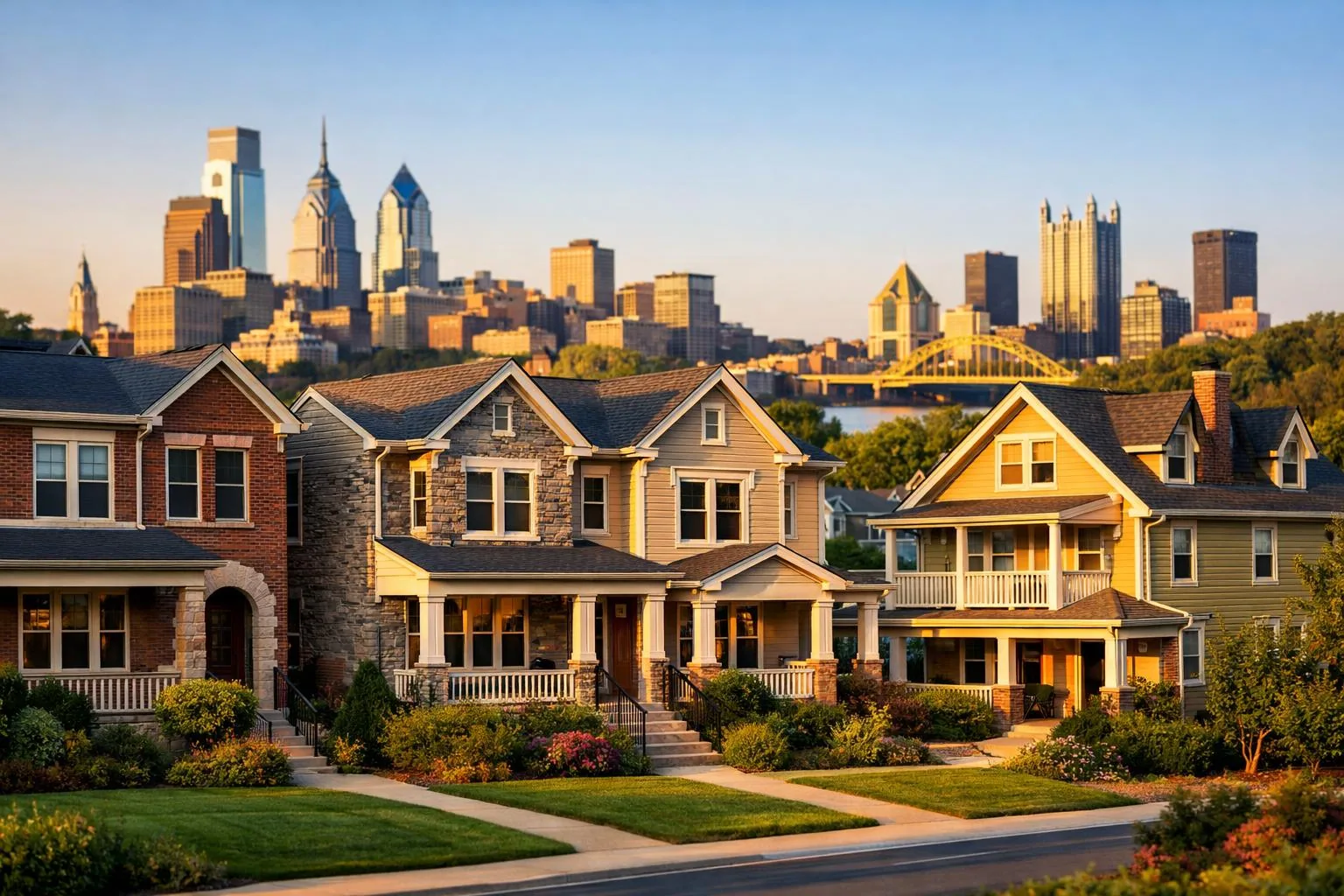
Pennsylvania is a “special-tier” DSCR state because 41 P.S. Section 405 prohibits prepayment penalties on residential mortgages at or below the annually-indexed base figure (roughly $346K in 2026) — regardless of whether the loan is business-purpose or consumer. Since most DSCR loans on 1-4 unit investor property fall under this cap, PA DSCR loans are structured WITHOUT prepayment penalties, and the resulting rates are typically 0.25-0.50% higher than comparable PPP-structured loans in non-PA states. Beyond this specific rule, PA offers strong Philadelphia and Pittsburgh markets with genuinely attractive cash-flow math in specific neighborhoods.
This guide walks through DSCR lending in Pennsylvania: the PPP prohibition, the two major metros, and the specific operational considerations that matter.
Why Investors Choose Pennsylvania
Pennsylvania’s population is essentially flat at 13 million, but the two major metros have very different investor theses.
Philadelphia has the largest 2-4 unit small-multifamily stock in the US after New York. Classic brick rowhouses, twin homes, and small multifamily built 1890-1940 dominate many neighborhoods. Fishtown, Kensington, Point Breeze, Fairmount, East Passyunk, South Philadelphia, West Philadelphia, and Mt. Airy each have distinct DSCR investment profiles. Philadelphia has been the subject of significant out-of-state DSCR investor activity since 2017, particularly in neighborhoods undergoing gentrification.
Pittsburgh has a very different market. Carnegie Mellon, University of Pittsburgh, UPMC healthcare system (one of the largest non-profit health systems in the US), a growing tech corridor (Google, Duolingo, Uber ATG legacy), and a diversified employer base have made Pittsburgh surprisingly stable post-steel-era. Cost basis is low; cap rates are high.
Secondary markets: Allentown-Bethlehem-Easton (Lehigh Valley) has a logistics and manufacturing base. Harrisburg is the state capital. Lancaster has tourism + manufacturing. Erie on Lake Erie has a healthcare and education economy.
DSCR Loan Rules in Pennsylvania — The PPP Prohibition
41 P.S. Section 405 (Pennsylvania’s “Act 6”) prohibits prepayment penalties on residential mortgages at or below the statutory “base figure.” The threshold is adjusted annually by the PA Department of Banking and Securities and sits at roughly $346K in 2026 (up from ~$312K in 2024). Critically, this prohibition applies regardless of whether the loan is consumer or business-purpose, owner-occupied or investor. Most DSCR loans on 1-4 unit rental property fall under the cap.
Practical effect:
- Pennsylvania DSCR loans on 1-4 unit property are structured without prepayment penalties
- Rates are typically 0.25-0.50% higher than a comparable PPP-structured loan in a non-PA state
- Investors planning to hold 5+ years usually pay less total than they would elsewhere (no PPP = no exit cost)
- Investors planning to refinance or sell within 3 years effectively get the same total cost as a PPP loan
Note: loans ABOVE the threshold (typically larger Philadelphia 4-unit deals or Pittsburgh luxury) can carry prepayment penalties if structured as non-residential or commercial. This is a complicated area — work with a lender experienced in PA DSCR structure.
Beyond the PPP prohibition, standard DSCR terms apply: min DSCR 0.75-1.25, max LTV 75%-80% on purchase, 70%-75% on cash-out refi, min FICO 660-680, 6 months reserves.
Taxes & Carrying Costs
Pennsylvania’s effective property tax rate of 1.56% is among the top 10. Rates vary significantly by county and school district. Philadelphia city runs roughly 1.4% total. Philly suburbs (Montgomery, Bucks, Delaware, Chester counties) often run 1.8-2.2%. Pittsburgh (Allegheny County) runs 1.8-2.2%. School district millage is often the largest component.
State income tax: flat 3.07% — one of the lowest flat-rate states. Out-of-state investors file PA non-resident returns.
Philadelphia and Pittsburgh city taxes: Philadelphia Net Profits Tax (3.75% resident / 3.44% non-resident) applies to Philadelphia-source business income. Pittsburgh has a local earned income tax (LST 1% + 1% school). Rental income reported through LLCs may or may not be subject depending on structure — work with a PA CPA for proper classification.
PA LLCs: $125 formation, $70 annual decennial report (every 10 years, plus Docketing Statement at formation).
Insurance in PA is moderate — $1,000-$1,600 per $300K across most of the state. Older urban housing (Philadelphia, Pittsburgh) with knob-and-tube wiring or older plumbing can face carrier issues.
Foreclosure & Eviction Landscape
Pennsylvania is a judicial foreclosure state. Process: complaint filing, Act 91 notice, sheriff’s sale. Philadelphia County has a mandatory Conciliation Conference Program (mortgage foreclosure diversion) that extends timelines materially — typical Philadelphia foreclosure runs 14-24 months. Non-Philadelphia Pennsylvania runs 8-12 months.
Eviction runs 45-90 days. Non-payment requires a 10-day notice (or contractual notice if longer). Landlords file a Landlord-Tenant complaint in magisterial district court. Philadelphia also has the Philadelphia Eviction Diversion Program that adds time. Physical removal by sheriff’s constable follows judgment.
Landlord-Tenant Law
No statewide rent control. Philadelphia’s City Council has debated local rent stabilization several times without passage. Philadelphia’s 2019 Good Cause Eviction ordinance (Phila. Code § 9-804) remains in force in 2026 and restricts the grounds on which a landlord may refuse to renew a lease of less than 12 months — it is not rent control, but it constrains no-cause non-renewals during the initial year of tenancy. The PA Landlord Tenant Act governs statewide. Security deposits are capped at two months’ rent for the first year (reduced to one month thereafter). Landlords have 30 days to return with itemized deductions and interest (on deposits held 2+ years in financial institutions).
Philadelphia Rental License (L&I) is required for most rental property. Annual inspection fees apply. Lead-based-paint certification is required (Philadelphia has one of the most stringent lead-safe programs in the US). Budget $300-$900 per property for compliance.
Top Pennsylvania Markets
Philadelphia — The anchor DSCR market. Neighborhood selection is everything. DSCR properties in Fishtown, Kensington ($250K-$450K for a rowhouse; rents $1,500-$2,200); Point Breeze ($225K-$400K; rents $1,400-$2,000); South Philly ($275K-$500K; rents $1,600-$2,300); Mt. Airy, Germantown, West Philly at lower basis. 2-4 unit “triplexes” and “twins” trade at 6-9% cap rates in many neighborhoods. Cap rates are structurally higher than most coastal metros because basis is lower.
Pittsburgh (Allegheny County) — DSCR properties in Lawrenceville, Bloomfield, East Liberty, Brighton Heights, Highland Park, Squirrel Hill, Greenfield. Cost basis $175K-$350K for single-family; rents $1,300-$2,000. Cap rates 7-10%. Significant older-housing-stock considerations.
Allentown / Lehigh Valley — Logistics boom (Amazon, FedEx hubs), manufacturing. Lower basis than eastern PA suburbs. DSCR properties $200K-$325K with rents $1,500-$2,000.
Harrisburg, Lancaster, Erie — Secondary markets with specific local economies.
Special Considerations
PPP prohibition is the defining PA DSCR fact. Philadelphia L&I rental license and lead-safe certification are non-negotiable compliance costs. Philadelphia foreclosure timelines are among the longest in the country — this affects lender pricing. Neighborhood-level variance in Philadelphia is extreme; a 15-minute walk can change rent comps by 40%.
Entity Formation Notes
PA LLCs cost $125 formation and have a $70 decennial report (every 10 years). No annual report requirement. Standard structures apply. Many investors use a Wyoming or Delaware parent holding LLC owning PA operating LLC. See the entity structure guide.
Getting Started
Work with a DSCR lender experienced in PA — the PPP rule is often mishandled by lenders without PA volume. Use the DSCR calculator, check current rates, then get matched.
Related guides: New Jersey, Ohio, Maryland.
Keep exploring
Hand-picked next steps — whether you want to go deeper on this topic, compare alternatives, or run the numbers.
Editor's picks
Hand-chosen follow-ups for this topic.
- Guide
What Is a DSCR Loan? The Complete 2026 Guide for Real Estate Investors
A DSCR loan qualifies a rental property on rental income ÷ PITIA — not personal income or tax returns. Full 2026 guide to ratios,…
- Guide
DSCR Loan Prepayment Penalties: Structures, Math, and How to Negotiate
Complete guide to DSCR loan prepayment penalties: 5/4/3/2/1 step-downs, buydown math, state restrictions, and exit strategies…
- Guide
DSCR Loan LLC Guide: Entity Structure, Vesting & Personal Guarantees
DSCR loan LLC guide: single-member, multi-member, S-Corp, trusts, personal guarantees, state selection, and lender requirements —…
- Property type
DSCR Loan for 2-4 Unit Properties: Duplex, Triplex & Quadplex Guide
DSCR loans for 2-4 unit properties in 2026: 75-80% LTV, 0.85-1.0 DSCR minimums, and the duplex, triplex, and fourplex lender…
- Investor profile
BRRRR + DSCR Strategy Guide: Buy, Rehab, Rent, Refinance, Repeat Financing
The BRRRR + DSCR refinance playbook: seasoning by lender, ARV appraisals, capital recycling math, and refinance mechanics that…
Compare other states
DSCR rules, rates, and tax posture in similar markets.
- State guide
DSCR Loans in District of Columbia
2026 guide to DSCR loans in Washington DC — Rental Housing Act rent control, TOPA tenant rights, slow judicial foreclosure, and…
- State guide
DSCR Loans in Hawaii
2026 guide to DSCR loans in Hawaii — PPP prohibition on 1-4 units, Honolulu STR rules, lowest US property tax at 0.28%, and best…
- State guide
DSCR Loans in Massachusetts
2026 guide to DSCR loans in Massachusetts — PPP prohibition on 1-4 units, Boston/Worcester markets, no statewide rent control,…
- State guide
DSCR Loans in Minnesota
2026 guide to DSCR loans in Minnesota — PPP prohibition on 1-4 units, Twin Cities markets, 6-month judicial foreclosure, and top…
DSCR loan products for your next deal
The financing structures investors use most in this market.
- Loan type
DSCR Purchase Loan: Complete 2026 Guide for Investors
Everything real estate investors need to know about using a DSCR purchase loan — LTV limits, rent schedule requirements, closing…
- Loan type
DSCR Cash-Out Refinance: 2026 Playbook for Investors
DSCR cash-out refinance 2026: LTV limits, seasoning rules, tax impact, delayed financing, and when the math actually pencils —…
- Loan type
DSCR Rate-and-Term Refinance: Can You Refinance a DSCR Loan? (2026)
Yes — you can refinance a DSCR loan with rate-and-term or cash-out. Seasoning (often 3–6 months), LTV, DSCR floors, PPP costs,…
Property types investors finance here
- Property type
DSCR Loan for Single-Family Rental (SFR): 2026 Investor Guide
DSCR loan for single-family rentals in 2026: 80% LTV, 0.75+ DSCR, baseline pricing, and the exact SFR lender landscape to shop…
- Property type
DSCR Loan for Airbnb & Short-Term Rentals: 2026 Complete Guide
DSCR loan for Airbnb and short-term rentals in 2026: AirDNA underwriting, 20% income haircut, STR lender shortlist, and every…
Run the numbers
Free interactive tools to stress-test your deal.
- Interactive tool
DSCR Ratio Calculator
Calculate your DSCR in seconds and see pass/fail by lender tier.
- Live rates
Today's DSCR Loan Rates
Live DSCR rate ranges by credit tier, LTV, and product type.
- Resource
Best DSCR Lenders of 2026
Head-to-head shortlist of the leading DSCR lenders with program details.
- Interactive tool
Prepayment Penalty Analyzer
Model step-down PPPs and compute the break-even for a no-PPP buydown.
Is There a DSCR Lender in This Market?
Coverage, foreclosure timelines, and local overlays decide whether the deal funds. Get matched now.
Shop every major DSCR lender in 60 seconds
Tell us about your deal once. We'll send you the top 3 lender offers within the hour.
Soft match — no credit pull, no spam. Your info stays with licensed brokers only.