Property-type guide
DSCR Loans for Short-Term Rentals (Airbnb / VRBO)
DSCR loan for Airbnb and short-term rentals in 2026: AirDNA underwriting, 20% income haircut, STR lender shortlist, and every regulated red flag market.
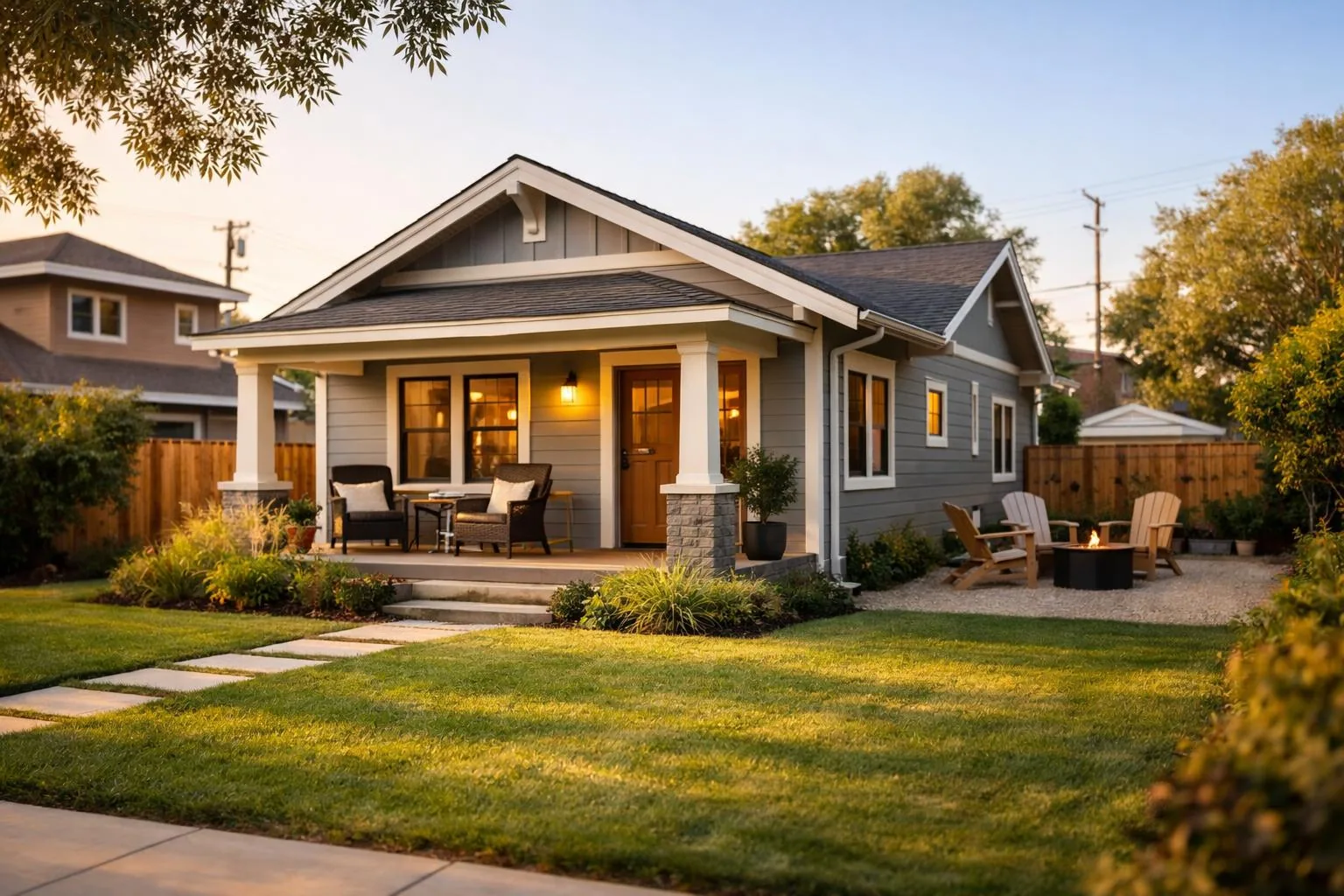
Short-term rentals — Airbnb, VRBO, direct-booked vacation rentals — have become one of the highest-demand use cases for DSCR loan financing in 2026. What started as a niche has grown into a full specialty within DSCR lending, with dedicated programs, AirDNA-integrated underwriting, and specialist lenders who understand vacation rental economics better than traditional mortgage shops. The flip side: STR DSCR underwriting is the most nuanced, most variable, and most operationally sensitive of any property type we cover. Two lenders looking at the same Airbnb will often produce DSCR numbers 20-30% different because of haircut methodology, seasonality treatment, and regulatory overlay.
This guide is the comprehensive playbook for investors financing a short-term rental with a DSCR loan. We cover every underwriting method in use, the specific lender programs that specialize in STR, the regulatory red flags by market, and the data-driven pre-qualification work you can do before ever talking to a lender. If you’re serious about using DSCR to build a short-term rental portfolio, this is the single most important property-type guide in our collection.
Key DSCR parameters for short-term rentals
| Parameter | Typical range (2026) | Best tier |
|---|---|---|
| Minimum DSCR | 1.00 – 1.15 | 1.25+ |
| Maximum LTV (purchase) | 75% – 80% | 80% |
| Maximum LTV (cash-out) | 70% – 75% | 75% |
| Minimum FICO | 680 – 720 | 740+ |
| Rate premium vs. LTR SFR | +0.25% – +0.75% | — |
| Operating history preferred | 12+ months | 24+ |
| Income haircut (host history) | 15% – 20% | 10% |
| Income haircut (AirDNA projection) | 20% – 25% | 15% |
| AirDNA Market Score minimum | 60 | 80+ |
| Minimum loan amount | $100,000 – $150,000 | n/a |
| Maximum loan amount | $2M – $3M | n/a |
| Cash reserves required | 6 months PITI | 9 – 12 |
STR sits between LTR SFR and condotel on the pricing grid. Clean SFR-STR in a strong regulatory environment with 12+ months history can price close to LTR; operationally complex STR (condotel-adjacent, new construction, no history) prices more like a non-warrantable condo. Knowing where your property falls on that spectrum is most of the pre-qualification work.
The STR DSCR lender landscape
STR-specific capabilities are not universal. About half the DSCR lender pool will quote STR with some form of projected income; the other half require LTR underwriting only. The specialists:
STR-friendly national lenders (2026):
- Visio Lending — Pioneer in STR-specific DSCR; accepts AirDNA projections with 20% haircut; well-developed underwriting workflow for vacation rentals.
- Kiavi — STR accepted with 12+ months host history preferred; AirDNA acceptable with larger haircut.
- Griffin Funding — STR DSCR as part of their program; up to $5M loan size; no-ratio STR available at 65% LTV.
- Lima One Capital — STR program with specific guidelines; operates well in established vacation markets.
- Angel Oak — Flexible STR underwriting; foreign national STR program; strong in Florida and Vegas markets.
- LendingOne — Competitive STR pricing for 720+ FICO borrowers with documented history.
- New Silver — Fast-close STR DSCR; 680 FICO floor; AirDNA-based underwriting standard.
- Verus / Deephaven / Acra (wholesale) — All three broker through specialist STR programs with varying haircut methodologies.
Market-specific boutique lenders:
- Tennessee mountain markets (Pigeon Forge, Gatlinburg): regional TN lenders with dedicated cabin/chalet STR programs.
- Florida beach markets (Destin, Panama City, Miami): Florida-based lenders with state-specific regulatory knowledge.
- Vacation destinations (Orlando/Kissimmee, Vegas, Park City, Scottsdale): local lenders often competitive with nationals.
LTR-only lenders who DON’T do STR underwriting:
A handful of DSCR lenders will finance an STR property but will only underwrite to the 1007 long-term rent comparable — ignoring all STR upside. If your property cash-flows as an LTR at 1.0+ DSCR, these are still viable. If it only cash-flows as an STR, you need an STR-specific program.
Qualification details
- Entity ownership: LLC standard. STR holding LLCs are common; some investors use a master LLC with a property-level single-purpose sub-LLC for liability separation.
- Personal guarantee: Required on nearly every STR DSCR loan.
- Landlord/host experience: Strongly preferred on STR. Many lenders pricing tiers favor operators with 2+ years of host history across any property; this is called “host seasoning” and can be 10-25 basis points of rate improvement.
- Reserves: 6 months PITI minimum; 9-12 months for multi-property STR portfolios or for high-seasonality markets.
- Operating history on subject: As above — 12+ months strongly preferred. Brand-new acquisitions default to AirDNA projections or LTR fallback.
- Regulatory verification: STR legality at the subject municipality verified by lender. Some markets require documented STR permits; lender requires permit or evidence that permit is obtainable.
- Furnishings: Disclosure typically required; most lenders do NOT finance furnishings (personal property, not real estate). A few specialty “turnkey STR” programs finance furnishings separately.
- Property management: Self-managed vs. professionally-managed is usually neutral to underwriting; some lenders prefer professional management on remote properties.
The three underwriting methods
Understanding which method the lender will use is critical.
Method 1: Trailing 12-month host history
- Data source: Airbnb or VRBO host dashboard export.
- What’s used: Gross booking revenue less platform fees, cleaning collected, taxes.
- Haircut: 15-20% typical.
- Occupancy assumption: Actual trailing.
- Seasonality: Built-in (already in trailing data).
- Best for: Seasoned STR properties with stable history.
Method 2: AirDNA Rentalizer projection
- Data source: AirDNA subject-property report (Rentalizer).
- What’s used: Projected annual revenue at property-specific unit type / bedroom count / amenity profile.
- Haircut: 20-25% typical.
- Occupancy assumption: AirDNA market occupancy.
- Seasonality: Averaged in AirDNA model.
- Best for: New acquisitions with no history, or properties with underperforming historical operation.
Method 3: LTR fallback (1007)
- Data source: Appraiser Form 1007 long-term rent comparables.
- What’s used: Market long-term rent.
- Haircut: None (this is already conservative).
- Occupancy assumption: LTR style (100% leased).
- Seasonality: N/A.
- Best for: Marginal STR markets, properties in areas with regulatory uncertainty, or lenders that don’t underwrite STR-specific income.
Most STR DSCR files use Method 1 or 2 for the income number, with Method 3 as a required supplemental data point. Some conservative lenders use the LOWER of Method 1/2 (haircut-adjusted) and Method 3.
AirDNA, Rabbu, Mashvisor & the data providers
- AirDNA: Market leader for STR data. Provides Rentalizer (property-level projection), Market Explorer (market-level analytics), and Market Score (60+ typically required). Most DSCR lenders accept AirDNA as primary source. Investor cost: $20-$50 per Rentalizer report.
- Rabbu: STR-focused analytics and projection tool. Accepted by some lenders as alternative or supplement to AirDNA. Cost: free tier available, premium features charged.
- Mashvisor: Mixed LTR/STR analytics. Less commonly accepted in DSCR underwriting; primary use case is investor pre-screening.
- Airbnb / VRBO dashboard exports: Primary source for trailing host history (Method 1). Most lenders want raw dashboard PDF or CSV.
Regulatory landscape — the kill list
STR is a regulated use in many markets. A non-exhaustive list of kill-list markets where DSCR STR financing typically fails:
- New York City — Local Law 18 (fully enforced September 2023, still in force as of July 2026): short rentals (<30 days) banned in most residential zones unless host is present and registered with the Office of Special Enforcement. Active listings contracted ~70% post-enforcement and remain suppressed. Pending bills (Int 0948-2024, Int 1107-2024) would open narrow pathways for 1-2 family homes but remain in committee. STR as investment essentially non-operational.
- San Francisco — 14-night-per-year cap for non-hosted rentals (as of FY2026); strict permitting; only primary residences eligible.
- Santa Monica — Similar owner-occupancy requirements; non-owner STR banned.
- Honolulu (Oahu) — 30-day minimum rental in most residential zones; limited transient vacation rental (TVR) permits.
- Paris, France (for context on “Paris Ordinance” terminology) — 120-day annual cap on primary residences; second-home STR effectively banned without business registration.
- Portland, OR — Type A/B/C permitting; owner-occupancy required for most programs.
- Nashville (Davidson County) — New non-owner-occupied (NOO) STR permits not issued in AR2A, R, RS, or RM residential zones since 2022. NOO permits only available in certain commercial/mixed-use zones (MUN, MUL, MUG, MUI, DTC, etc.) and cap per census block. Existing NOO permits are non-transferable at sale.
- Austin — Type 2 non-owner-occupied STR essentially phased out in residential zones.
- Dallas — City’s 2023 STR ban in single-family residential zones remains blocked by a Texas appeals-court injunction (upheld February, July, and August 2025). Dallas has asked the Texas Supreme Court to lift the injunction ahead of the 2026 FIFA World Cup. Until then, STR operation continues under the prior rules, but regulatory risk is elevated — DSCR lenders may require LTR fallback underwriting or decline outright.
- New Orleans — Operator License required through the city portal; $1M liability insurance minimum; primary-residence requirement (or on-site operator); cap of 3 STRs per square block allocated by lottery; 2026 renewals stricter with mandatory safety inspections.
- Various Colorado mountain towns (Breckenridge, Telluride, Crested Butte) — moratoriums or strict caps.
Before going under contract on an STR, verify the subject municipality’s STR rules. If the property is in a banned or severely restricted market, DSCR financing will either decline or require LTR underwriting only.
Rate and fee expectations
July 2026 ballparks on a clean STR DSCR file (720+ FICO, 1.15 DSCR, 75% LTV, 5-year prepay, 12+ month host history):
- STR 30-year fixed (well-seasoned, low-regulation market): 6.625% – 7.500%
- STR 30-year fixed (newer, marginal market): 7.125% – 8.000%
- 10-year I/O intro: +0.125% – +0.25% over 30-year fixed
- Lender points: 1.25 – 2.25 points
- Appraisal (1004 + 1007 + STR addendum): $650 – $1,100
- AirDNA Rentalizer (if borrower obtains): $20 – $50
- Underwriting/processing: $1,500 – $2,250
- Title/settlement: $1,500 – $3,500
- Total closing costs (excluding down payment): 4.0% – 6.0% of loan amount
Common pitfalls on STR DSCR loans
- Overstating projected revenue. Investors model at peak AirDNA occupancy (70-80%); lender applies 20-25% haircut and underwrites at 55-65% effective. Model realistically.
- Ignoring seasonality trough months. A beach property netting $15K in July but $1,500 in February averages to $8K/month — not $15K. Underwriting uses the average.
- STR-banned market surprise. NYC, SF, Santa Monica — deal dies. Verify municipal STR rules in diligence.
- Furnishing cost omitted. Quality STR furnishing runs $25K-$75K on top of purchase. Most lenders don’t finance it; it’s out-of-pocket or a separate line of credit.
- Cleaning/turnover costs omitted. Underwriting typically ignores operational expenses beyond PITI, but the haircut is meant to cover them. If your model doesn’t budget cleaning, restocking, and management, cash flow will disappoint.
- Platform fees ignored. Airbnb takes 3-15% depending on host plan; VRBO similar. Modeling to gross booking revenue overstates DSCR by 10-15%.
- New construction with no comps. AirDNA data relies on comparable unit types; unique or newly-built properties with no comps force the lender to LTR fallback.
- HOA/neighborhood STR bans. Even in STR-legal cities, specific HOAs or deed-restricted communities ban STR. Verify governing docs.
- Insurance coverage. Standard homeowner’s insurance doesn’t cover STR use. Proper STR insurance (Proper, Slice, CBIZ, standalone commercial property) costs $2,000-$5,000+ annually vs. $1,200-$1,800 for LTR coverage.
- Self-reporting inflated income. Host dashboard is the source of truth; don’t inflate self-reported figures. Underwriting pulls direct from the platform via borrower-supplied exports.
Strategy notes
STR DSCR is the right tool when:
- You have 12+ months of documented host history on the subject (or can use AirDNA with acceptable haircut).
- Subject market has AirDNA Market Score 60+ and no restrictive STR regulation.
- DSCR pencils at 1.10+ at 70-75% LTV AFTER the lender haircut is applied.
- You have 25-30% down payment and 6-12 months reserves.
- You’ve priced realistic furnishing, cleaning, management, and platform fees into your pro forma.
- You’re experienced with STR operations OR hiring a professional management company with documented history.
It’s the wrong tool when:
- Subject is in STR-banned or heavily restricted market (NYC, SF, Santa Monica, etc.) — deal won’t work for STR use.
- Property is brand-new with no history AND market is borderline regulated AND AirDNA data is thin — lender defaults to LTR fallback where the property may not cash flow.
- Investor plans to Airbnb without any experience — operational volatility plus financing volatility can compound.
- Seasonality creates 6+ months of thin shoulder income below breakeven — even with peak upside, average DSCR may not clear 1.0.
Related tools
- STR DSCR Analyzer — our specialized calculator that models AirDNA projections with configurable haircuts, seasonality adjustments, and platform fees. Purpose-built for STR investors.
- DSCR Calculator for LTR fallback scenarios
- Qualification Estimator for borrower-level pre-qualification
- Rates for current STR pricing context
Related market guides
- Florida DSCR — largest STR market in the US
- Tennessee DSCR — Pigeon Forge / Gatlinburg cabin markets
- Nevada DSCR — Las Vegas STR and condotel
Related foundational content
- What Is a DSCR Loan — baseline concepts
- DSCR Loan Requirements — borrower eligibility
- Closing Costs and Fees — fee breakdown
- Best DSCR Lenders — lender comparison
STR is the most specialized property type in DSCR lending. The wrong lender can cost you 0.75% in rate and 10 LTV points. Get matched with DSCR lenders who actually specialize in Airbnb and short-term rentals in your specific market.
Keep exploring
Hand-picked next steps — whether you want to go deeper on this topic, compare alternatives, or run the numbers.
Editor's picks
Hand-chosen follow-ups for this topic.
- Guide
What Is a DSCR Loan? The Complete 2026 Guide for Real Estate Investors
A DSCR loan qualifies a rental property on rental income ÷ PITIA — not personal income or tax returns. Full 2026 guide to ratios,…
- Loan type
No-Ratio DSCR Loan (No-Ratio Mortgage): Qualify Without Rent Docs (2026)
No-ratio DSCR loans — also called no-ratio mortgages — skip rental income verification. Who qualifies, lenders, rate premiums vs…
- Property type
DSCR Loan for Single-Family Rental (SFR): 2026 Investor Guide
DSCR loan for single-family rentals in 2026: 80% LTV, 0.75+ DSCR, baseline pricing, and the exact SFR lender landscape to shop…
- Investor profile
BRRRR + DSCR Strategy Guide: Buy, Rehab, Rent, Refinance, Repeat Financing
The BRRRR + DSCR refinance playbook: seasoning by lender, ARV appraisals, capital recycling math, and refinance mechanics that…
Similar property types
How DSCR underwriting shifts when the asset class changes.
- Property type
DSCR Loan for Warrantable Condos: Fannie/Freddie Proxy Standards
DSCR loan for warrantable condos in 2026: 75-80% LTV, Fannie/Freddie warrantability rules, condo questionnaire, and post-Surfside…
- Property type
DSCR Loan for 2-4 Unit Properties: Duplex, Triplex & Quadplex Guide
DSCR loans for 2-4 unit properties in 2026: 75-80% LTV, 0.85-1.0 DSCR minimums, and the duplex, triplex, and fourplex lender…
Loan products that fit this property type
- Loan type
DSCR Purchase Loan: Complete 2026 Guide for Investors
Everything real estate investors need to know about using a DSCR purchase loan — LTV limits, rent schedule requirements, closing…
- Loan type
DSCR Cash-Out Refinance: 2026 Playbook for Investors
DSCR cash-out refinance 2026: LTV limits, seasoning rules, tax impact, delayed financing, and when the math actually pencils —…
- Loan type
DSCR Rate-and-Term Refinance: Can You Refinance a DSCR Loan? (2026)
Yes — you can refinance a DSCR loan with rate-and-term or cash-out. Seasoning (often 3–6 months), LTV, DSCR floors, PPP costs,…
Popular states for this asset
- State guide
DSCR Loans in Florida
Complete 2026 guide to DSCR loans in Florida — rates, insurance crisis impact, condo rules, Miami/Orlando/Tampa markets, and the…
- State guide
DSCR Loans in Texas
Complete 2026 guide to DSCR loans in Texas — no state income tax, no prepayment penalties on 1-4 units, fast foreclosure, and the…
- State guide
DSCR Loans in California
Complete 2026 guide to DSCR loans in California — AB1482 rent control, Prop 13 reassessment, $800 LLC tax, LA/SF/San Diego…
- State guide
DSCR Loans in Georgia
Complete 2026 guide to DSCR loans in Georgia — PPP prohibition on 1-4 units, fast non-judicial foreclosure, Atlanta/Savannah…
Run the numbers
Free interactive tools to stress-test your deal.
- Interactive tool
Short-Term Rental DSCR Analyzer
Run Airbnb income through lender STR haircuts with LTR fallback.
- Interactive tool
DSCR Ratio Calculator
Calculate your DSCR in seconds and see pass/fail by lender tier.
- Interactive tool
DSCR Qualification Estimator
Estimate your rate range, LTV cap, and approval odds before you apply.
- Live rates
Today's DSCR Loan Rates
Live DSCR rate ranges by credit tier, LTV, and product type.
Will Your STR Clear Lender DSCR?
Run the STR analyzer, then get matched to lenders that accept short-term rental income.
Shop every major DSCR lender in 60 seconds
Tell us about your deal once. We'll send you the top 3 lender offers within the hour.
Soft match — no credit pull, no spam. Your info stays with licensed brokers only.