Property-type guide
DSCR Loans for Non-Warrantable Condos & Condotels
DSCR loan for non-warrantable condos and condotels in 2026: 65-70% LTV, 1.20+ DSCR, and the specialist lender pool for Miami, Vegas, and Kissimmee condotels.
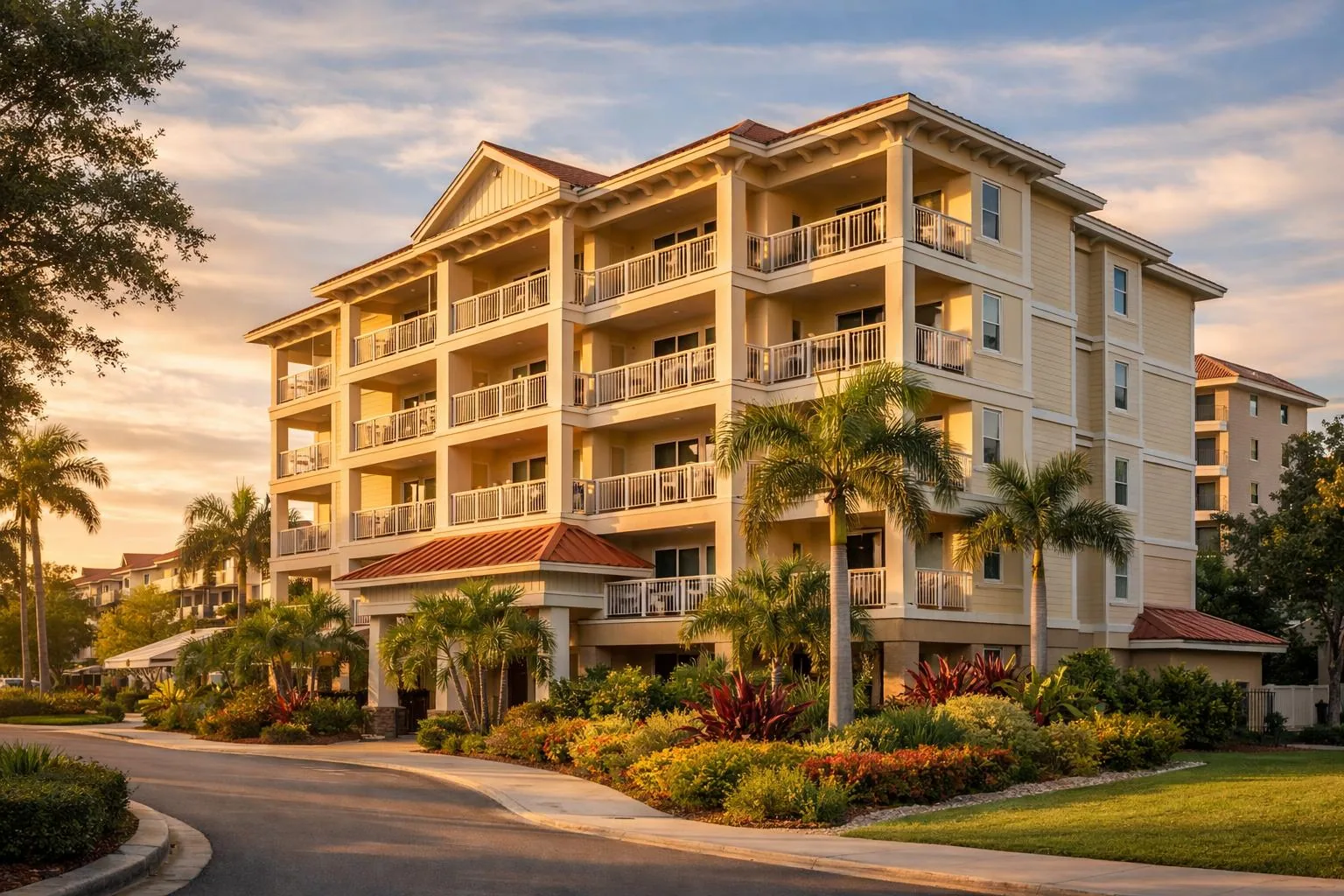
Scenario & timing analysis: For Florida milestone inspection and HOA questionnaire timing in 2026, see non-warrantable condo DSCR in Florida.
Non-warrantable condos and condotels are where DSCR loan financing gets genuinely difficult — but also where the pricing gap between a matched lender and the wrong lender is the widest. Because only 15-25% of DSCR lenders will quote this property class, investors who don’t shop aggressively often pay 0.50-0.75% more than necessary. And because the property’s cash flow story (Airbnb, seasonal vacation rental, hotel-program distribution) is operationally complex, underwriting mistakes can kill deals that should close cleanly.
This guide covers two related-but-distinct property types: (1) non-warrantable condos — standard condos that fail one or more Fannie/Freddie project standards — and (2) condotels — condos operated as hotels with nightly rentals, front desks, housekeeping, and brand flags. They share a lender pool and most underwriting conventions, but condotels have a few additional layers (rental program documentation, brand flag underwriting, seasonality overlays) covered below.
Key DSCR parameters for non-warrantable condos & condotels
| Parameter | Typical range (2026) | Best tier |
|---|---|---|
| Minimum DSCR | 1.20 – 1.25 | 1.35+ |
| Maximum LTV (purchase) | 65% – 70% | 70% |
| Maximum LTV (cash-out) | 60% – 65% | 65% |
| Minimum FICO | 680 – 720 | 740+ |
| Rate premium vs. SFR | +0.75% – +1.50% | — |
| Minimum loan amount | $150,000 – $250,000 | n/a |
| Maximum loan amount | $1.5M – $3M | n/a |
| Cash reserves required | 6 – 12 months PITI | 12+ |
| Appraisal form | Form 1073 + condotel addendum | — |
| Appraisal cost | $700 – $1,500 | — |
| Operating history required | 6-12 months typical | 12+ |
Setting expectations: this is the second-most-expensive property type in our entire DSCR collection (only exceeded by 5-10 unit commercial multifamily). You trade broadly worse pricing and lower leverage for access to a specific, high-yield property class — vacation rental inventory in high-tourist markets where the cash-on-cash returns can be 12-18% if operated well.
Non-warrantable vs. condotel: the distinction
- Non-warrantable condo: A standard condo unit in a project that fails Fannie/Freddie standards. The unit itself may operate as a long-term rental. Example: a regular apartment-style condo in a project where 65% of units are investor-owned (fails owner-occupancy test).
- Condotel: A unit in a project explicitly operated as a hotel. Front desk, daily maid, short-term/nightly rental as primary use, often branded (Residences at [Hotel Brand]), rental program mandatory or strongly encouraged. Automatic non-warrantable by definition.
Some projects are “condotel-like” — e.g. a high-rise Miami Beach condo with 80% investor ownership where most owners Airbnb — but without a formal rental program or hotel flag. These often get underwritten as non-warrantable rather than condotel, slightly better pricing.
The non-warrantable & condotel DSCR lender landscape
The pool thins dramatically here. Active players in 2026:
National lenders:
- Angel Oak — Strong on non-warrantable and condotel; foreign national condotel program available; 65-70% LTV.
- Griffin Funding — Non-warrantable condo and condotel accepted; condotel rate adds clearly documented in their rate sheets.
- Visio Lending (CoreGrowth) — Non-warrantable condo at 70% LTV; condotel case-by-case.
- Kiavi — Selective on non-warrantable; condotel generally declined unless very strong file and specific markets.
- Lima One Capital — Condotel accepted with guidelines; short-term rental operating history required.
- Verus / Deephaven / Acra (wholesale) — All three have non-warrantable and condotel programs with varying overlays.
- LendingHome (Kiavi’s legacy brand) and New Silver — Selective on non-warrantable, typically decline condotel.
Market-specific boutique lenders:
- Miami / South Florida: Several Miami-based private lenders and regional banks have dedicated condotel programs, often with better pricing than national DSCR lenders.
- Las Vegas: Local Nevada lenders with Strip-condotel specialty; often willing to go to 70% LTV on strong files.
- Kissimmee / Orlando (Disney area): Specialty lenders for vacation rental pool condos; 65% LTV standard, strong STR documentation required.
- Pigeon Forge / Gatlinburg / Gulf Shores: Regional Tennessee and Alabama lenders with small portfolio programs for STR condos in tourism markets.
The action item for any investor: pull 3+ quotes from national DSCR lenders AND at least 1-2 local/regional specialists in the subject market. The local-vs-national spread is often 0.375-0.625% in rate and 5 LTV points.
Qualification details
- Entity ownership: LLC standard.
- Personal guarantee: Required.
- Landlord or STR experience: Preferred on condotel. 1-2 years of operating experience on similar assets is typically a pricing improvement and sometimes a requirement.
- Operating history on subject: 6-12 months of STR operating data strongly preferred. Brand-new condo with no history can still close at reduced LTV (60-65%).
- Reserves: 6-12 months PITI; condotel often requires 12+.
- Hotel program / rental program participation: If the condotel has a mandatory rental program, the program’s net distribution statements become the income documentation. Lender reviews the program management agreement.
- Foreign national: A meaningful percentage of condotel buyers in Miami, Orlando, and Las Vegas are foreign nationals. Angel Oak, Griffin, and several wholesale lenders have dedicated foreign national programs.
Appraisal and income verification
- Appraisal form: Form 1073 with condotel/short-term addendum documenting hotel amenities, rental program, brand flag, and project-level operations.
- Cost: $700 – $1,500; higher end for condotel due to complexity.
- Turn time: 7 – 18 business days.
- Comparables: Condotel comparables are required — NOT standard condo comps. An appraisal that uses SFR or warrantable-condo comps in a condotel market will be flagged and likely require re-work.
- Rental income determination:
- With 12+ months host history: AirDNA or Airbnb/VRBO host dashboard trailing 12 months; most lenders apply a 15-25% haircut.
- Hotel-program unit: Rental program net distribution statements, reviewed 12-24 months.
- New construction / no history: Appraiser provides STR market rent estimate OR long-term rental comp as fallback. Lender often applies larger haircut (25-30%) on pure projected income.
- Seasonality: High-season and low-season income is averaged; lender doesn’t underwrite to peak season.
- Regulatory verification: Short-term rental legality in the subject municipality must be documented — this kills many deals in cities that banned or restricted STR (NYC, San Francisco, some California coastal cities, Paris-ordinance markets).
Rate and fee expectations
July 2026 ballparks on a clean non-warrantable condo or condotel (720+ FICO, 1.25 DSCR, 65% LTV, 5-year prepay):
- Non-warrantable condo 30-year fixed: 7.625% – 8.500%
- Condotel 30-year fixed: 7.875% – 8.875%
- 10-year I/O intro: +0.125% – +0.375% over 30-year fixed
- Lender points: 1.50 – 2.75 points
- Appraisal: $800 – $1,500
- Condo questionnaire (even for non-warrantable): $100 – $350
- Underwriting/processing: $1,500 – $2,500
- Title/settlement: $1,800 – $4,500
- Total closing costs (excluding down payment): 4.5% – 7.0% of loan amount
LTV pricing: 70% vs. 65% LTV typically adds 0.25-0.375%; going to 60% typically saves 0.25%.
Common pitfalls on non-warrantable condo & condotel loans
- Shopping the wrong lender pool. A full-service SFR-DSCR lender will decline condotel after you’ve burned 2 weeks of underwriting. Ask upfront: “Do you accept condotels in [subject market]?”
- No operating history. Brand-new condotel with 0-3 months of operating data forces underwriting to projections — larger haircut, lower LTV. Season the property 6-12 months before refinancing if possible.
- Rental restriction violation. Some condotel HOAs require participation in the hotel rental program. Buying an “opt-out” unit can violate declaration and make the deal unfinanceable.
- STR-banned market. Some cities (NYC, SF, parts of CA) have banned STR or restricted to owner-occupied hosts only. Financing doesn’t work if the business model is illegal. Verify local STR regulation before contract.
- Florida post-Surfside. Older Miami and South Florida condotels face structural review overlays. Some lenders have pulled out entirely.
- Failing the AirDNA haircut. Investors often model on gross AirDNA revenue; underwriting uses net (after cleaning, platform fees, management) with a 15-25% haircut on top. Model realistically.
- Seasonal markets at 60% occupancy. Beach and ski condotels often have 55-70% annual occupancy (vs. 70-85% in urban STR). Underwriter uses actual occupancy; if occupancy is lower than DSCR math requires, the deal won’t pencil.
- Brand-flag changes. A condotel under a Marriott flag that loses its flag mid-process creates a material change in valuation and operations. Lenders may require re-review.
- HOA assessment surprises. Condotel HOAs can assess heavily for elevator modernization, brand-required upgrades, or reserve shortfalls. Review recent minutes and reserve study.
Market-specific notes
- Miami / South Florida: Largest condotel inventory in the US. Post-Surfside SB 4-D compliance mandatory. Florida DSCR has state-level detail.
- Las Vegas / Nevada: Strip and off-Strip condotels; Vegas lenders competitive; 70% LTV achievable. Nevada DSCR details.
- Kissimmee / Orlando: Disney-adjacent vacation condo inventory; tight rental program requirements; 65% LTV standard.
- Gulf Shores / Orange Beach: Alabama seasonal beach condotels; 60-70% annual occupancy typical; be realistic on DSCR math.
- Pigeon Forge / Gatlinburg: Tennessee mountain STR condos; regional lenders often outprice nationals. Tennessee DSCR for state context.
Strategy notes
Non-warrantable / condotel DSCR is the right tool when:
- You’re buying vacation rental or STR inventory in established tourism markets.
- The property has 12+ months of strong operating history with documented income.
- You have 30-35% down payment capacity and 12+ months reserves.
- DSCR pencils at 1.25+ at 65% LTV AFTER lender haircut on projected income.
- You’ve confirmed STR is legal and permitted in the subject municipality.
It’s the wrong tool when:
- The condo is actually warrantable — use the better-priced warrantable program.
- Local regulations restrict or ban STR (NYC, SF, certain CA markets, Paris-ordinance-style restrictions).
- You have no operating history and no STR experience — consider seasoning as LTR for 12 months first, then refinance.
- The subject is in a declining condotel market with oversupply (some pockets of Las Vegas and Florida) — appraisal and DSCR underwriting will be challenging.
Related tools
- STR DSCR Analyzer — our specialized short-term rental income model
- DSCR Calculator for LTR fallback math
- Qualification Estimator
- Florida DSCR, Nevada DSCR, Tennessee DSCR — top condotel markets
- What Is a DSCR Loan for foundations
- DSCR Loan Requirements
Non-warrantable and condotel deals require a specialist — not every DSCR lender will quote them. Get matched to be paired with lenders who actually fund this property type in your market.
Keep exploring
Hand-picked next steps — whether you want to go deeper on this topic, compare alternatives, or run the numbers.
Editor's picks
Hand-chosen follow-ups for this topic.
- Guide
What Is a DSCR Loan? The Complete 2026 Guide for Real Estate Investors
A DSCR loan qualifies a rental property on rental income ÷ PITIA — not personal income or tax returns. Full 2026 guide to ratios,…
- Property type
DSCR Loan for Warrantable Condos: Fannie/Freddie Proxy Standards
DSCR loan for warrantable condos in 2026: 75-80% LTV, Fannie/Freddie warrantability rules, condo questionnaire, and post-Surfside…
- Property type
DSCR Loan for Airbnb & Short-Term Rentals: 2026 Complete Guide
DSCR loan for Airbnb and short-term rentals in 2026: AirDNA underwriting, 20% income haircut, STR lender shortlist, and every…
- Loan type
No-Ratio DSCR Loan (No-Ratio Mortgage): Qualify Without Rent Docs (2026)
No-ratio DSCR loans — also called no-ratio mortgages — skip rental income verification. Who qualifies, lenders, rate premiums vs…
Similar property types
How DSCR underwriting shifts when the asset class changes.
Loan products that fit this property type
- Loan type
DSCR Purchase Loan: Complete 2026 Guide for Investors
Everything real estate investors need to know about using a DSCR purchase loan — LTV limits, rent schedule requirements, closing…
- Loan type
DSCR Cash-Out Refinance: 2026 Playbook for Investors
DSCR cash-out refinance 2026: LTV limits, seasoning rules, tax impact, delayed financing, and when the math actually pencils —…
- Loan type
DSCR Rate-and-Term Refinance: Can You Refinance a DSCR Loan? (2026)
Yes — you can refinance a DSCR loan with rate-and-term or cash-out. Seasoning (often 3–6 months), LTV, DSCR floors, PPP costs,…
Popular states for this asset
- State guide
DSCR Loans in Florida
Complete 2026 guide to DSCR loans in Florida — rates, insurance crisis impact, condo rules, Miami/Orlando/Tampa markets, and the…
- State guide
DSCR Loans in Texas
Complete 2026 guide to DSCR loans in Texas — no state income tax, no prepayment penalties on 1-4 units, fast foreclosure, and the…
- State guide
DSCR Loans in California
Complete 2026 guide to DSCR loans in California — AB1482 rent control, Prop 13 reassessment, $800 LLC tax, LA/SF/San Diego…
- State guide
DSCR Loans in Georgia
Complete 2026 guide to DSCR loans in Georgia — PPP prohibition on 1-4 units, fast non-judicial foreclosure, Atlanta/Savannah…
Run the numbers
Free interactive tools to stress-test your deal.
- Interactive tool
DSCR Ratio Calculator
Calculate your DSCR in seconds and see pass/fail by lender tier.
- Interactive tool
Short-Term Rental DSCR Analyzer
Run Airbnb income through lender STR haircuts with LTR fallback.
- Interactive tool
DSCR Qualification Estimator
Estimate your rate range, LTV cap, and approval odds before you apply.
- Live rates
Today's DSCR Loan Rates
Live DSCR rate ranges by credit tier, LTV, and product type.
Finance This Asset Type With DSCR
Overlays change for SFR, 2–4, multifamily, and condo. Run the ratio, then get matched.
Shop every major DSCR lender in 60 seconds
Tell us about your deal once. We'll send you the top 3 lender offers within the hour.
Soft match — no credit pull, no spam. Your info stays with licensed brokers only.