State guide · NY
DSCR Loans in New York: 2026 Investor's Guide
DSCR loan New York guide 2026 — rates, requirements, rent stabilization overlays, Good Cause Eviction, LLC publication rule, and NYC/Long Island lender notes.
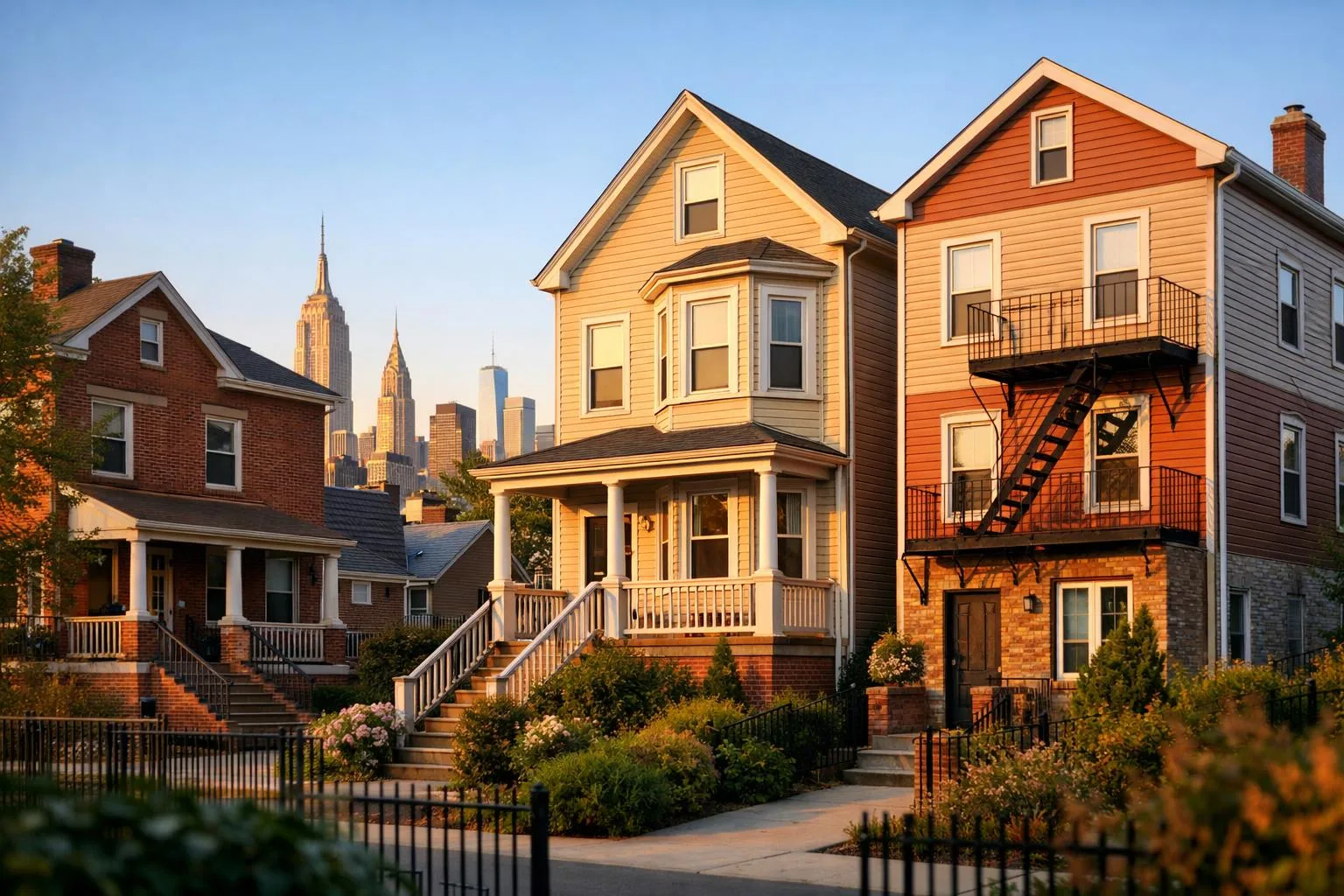
New York is the most-regulated, most-taxed, and slowest-foreclosure DSCR state in the country. The state combines a prepayment-penalty prohibition, the nation’s slowest judicial foreclosure, rent stabilization on pre-1974 buildings, a 2024 Good Cause Eviction overlay, and an LLC publication requirement that costs $1,000-$2,000 per entity formed. For downstate (NYC/Long Island/Westchester) investors, it is among the hardest environments in the country to DSCR-finance profitably. For upstate (Buffalo/Rochester/Syracuse) investors, cash-flow math still works — the state’s regulatory stack is less painful when entry prices are low.
This guide covers the New York DSCR environment in 2026: every layer of the regulatory stack, how each prices in, and the strategies that still pencil.
Why Investors Choose New York
The downstate thesis is appreciation and global capital backstop. NYC has been a premier real-estate market for a century; supply constraint is extreme; capital liquidity is deep. Long Island and Westchester benefit from NYC-commuter demand. Downstate DSCR is rarely about current yield and almost always about long-term hold, 1031 exchanges, and generational wealth preservation.
The upstate thesis is cash flow. Buffalo, Rochester, and Syracuse have entry prices in the $100K-$200K range on solid SFR with rents that support DSCR. The regulatory overlay is lighter upstate (Good Cause not universally adopted), foreclosure is still slow but carry risk is proportionally smaller.
DSCR Loan Rules in New York
Stacked premiums. NY DSCR pricing reflects:
- No-PPP on 1-4 unit (+0.25%-0.50%)
- Judicial foreclosure at 24-36+ months (+0.25%-0.50%)
- Regulatory overlay (rent stabilization, Good Cause, eviction moratorium history) (+0.125%-0.25%)
Combined: NY DSCR rates run 0.50%-1.00% above comparable Southern-state quotes. July 2026 NY 30-year fixed DSCR commonly prints 7.00%-8.00%, at and beyond the top of the national 6.25%-7.875% band. Not every national DSCR lender actively quotes NY; several explicitly exclude rent-stabilized and Mitchell-Lama properties entirely.
NY Department of Financial Services licenses non-QM lenders. Licensed lenders include Kiavi, CoreVest, Visio, LendingOne, Angel Oak, and select private capital. Easy Street Capital and Lima One also fund NY.
| Typical New York DSCR Terms, 2026 | Range |
|---|---|
| Minimum DSCR | 1.10 - 1.25 |
| Max LTV (purchase) | 70% - 75% |
| Max LTV (cash-out refi) | 65% - 70% |
| Minimum FICO | 680 - 720 |
| Prepayment penalty | Prohibited on 1-4 unit |
| Rent-stabilized units | Often declined or specialty-priced |
Taxes & Carrying Costs
State income tax. Graduated, topping at 10.9%. NYC residents add 3.876% city income tax (top bracket). Yonkers adds a 16.75% surcharge on state tax.
Property tax. Varies dramatically by location:
- NYC effective rate on 1-3 family: ~0.90% (relatively low, subsidized by commercial property taxes)
- NYC larger multifamily (4+ unit, Class 2): effective rate varies widely, often 2%+ on equalized value
- Long Island (Nassau, Suffolk): 2.0%-2.5% effective — among the highest in the country
- Westchester: 1.75%-2.25%
- Buffalo / Erie County: ~2.3%-2.6% effective
- Rochester / Monroe: ~2.5%-3.0% effective
Upstate effective rates are actually higher than downstate — the difference is that upstate property values are lower in absolute dollars.
Mansion Tax. NYC applies a 1%-3.9% mansion tax on residential purchases over $1M (tiered). State mansion tax of 1% applies statewide on purchases over $1M.
LLC publication. Every new NY LLC must publish formation notice in two newspapers for 6 consecutive weeks. NYC county newspapers cost $1,000-$2,000 combined; Albany County typically $300-$800. Many investors form their NY LLC with a designated office in Albany County to minimize this cost.
NY LLC fees. $200 to form, $9 biennial statement. Publication cost is the real expense.
Transfer taxes. State 0.4% + NYC 1%-2.625% transfer tax on sale.
Insurance. NYC insurance requirements for larger multifamily are stringent (sidewalk liability, bedbug riders). Long Island coastal carries windstorm. Upstate pricing is standard.
Foreclosure & Eviction Landscape
Judicial foreclosure under RPAPL Article 13. Typical timeline 24-36 months uncontested; contested cases routinely run 4-6 years. Mandatory settlement conferences, extensive notice requirements, and borrower defenses stack. New York is consistently the #1 or #2 slowest foreclosure state in America.
Eviction. NY has multiple statutes depending on property type and location:
- Non-payment proceeding: 14-day demand notice, filing in Housing Court (NYC) or local court. Typical timeline 60-180 days uncontested; much longer in NYC Housing Court backlogs.
- Holdover proceeding: For end-of-lease; longer notice periods (30-90 days depending on tenancy length).
- Good Cause Eviction: Where adopted (NYC and opt-in municipalities), non-renewal requires enumerated cause.
NYC Housing Court is one of the most tenant-protective venues in the country. Upstate courts are faster but still judicial.
Landlord-Tenant Law
Rent stabilization. NYC buildings with 6+ units built before 1974 are generally rent-stabilized (with exceptions for newer construction under 421-a and related tax programs). The Rent Guidelines Board sets annual increase caps (recent years: 2%-3% on 1-year renewals, 4%-5.25% on 2-year). The 2019 HSTPA eliminated high-rent vacancy decontrol, eliminated the 20% vacancy increase, and restricted Major Capital Improvement pass-throughs. Rent-stabilized NOI is essentially capped — a major DSCR underwriting issue.
Good Cause Eviction (2024). State law applying by default in NYC and allowing other municipalities to adopt. Caps rent increases (10% or 5% + CPI, whichever is lower) and requires cause for non-renewal. Coverage exemptions: new construction within 30 years, small-portfolio landlords, and owner-occupied small buildings. As of early 2026, roughly 19 municipalities have opted in — Albany, Rochester, Ithaca, Kingston, Poughkeepsie, Beacon, Newburgh, Nyack, Hudson, New Paltz, Fishkill, Catskill, Croton-on-Hudson, Binghamton and others, with several adopting stronger-than-state versions (lower rent thresholds, tighter exemptions). About one million NY renters are now covered. Long Island and most NYC-adjacent suburban counties have not opted in.
Security deposits. Capped at 1 month rent.
Late fees. Capped at $50 or 5% of monthly rent, whichever is less — and cannot be charged until rent is 5+ days late.
Warranty of habitability. Statutorily implied in every residential lease.
New York is the single most tenant-protective state legal environment in the country.
Top New York Markets
NYC Boroughs. Manhattan, Brooklyn, Queens, Bronx, Staten Island. Each sub-borough has distinct dynamics. Brooklyn 2-4 family (brownstone conversions, Bed-Stuy, Crown Heights, East New York) is the most common DSCR target. Queens 2-3 family in Astoria, Jackson Heights, Flushing is active. Bronx multifamily heavily rent-stabilized and specialty.
Long Island (Nassau, Suffolk). Commuter-rail SFR, high property tax drag, strong rent. Valley Stream, Levittown, Hempstead, Brentwood for SFR.
Westchester. Commuter-rail SFR and 2-4 unit. Yonkers (higher regulation), White Plains, New Rochelle, Mount Vernon.
Buffalo / Erie County. Upstate cash-flow leader. $80K-$180K SFR pipelines, Buffalo Niagara Medical Campus employment, UB tenant base.
Rochester / Monroe County. Similar profile to Buffalo. University of Rochester, Rochester Institute of Technology, and health-system employment. High effective property tax but low absolute prices.
Albany / Capital Region. State-government employment, moderate prices, growing tech/bio around SUNY Albany.
Special Considerations
The LLC publication rule. Form NY LLCs with designated office in Albany County (or Broome, etc.) to minimize publication cost. Wyoming-parent / NY-operating-LLC structures still require the NY LLC to publish. This is a real $1,000-$2,000+ per entity expense that surprises out-of-state investors.
Rent-stabilized files. Before writing a contract on any pre-1974 NYC 6+ unit building, obtain the current rent roll with stabilization status. Lenders will underwrite stabilized units at actual rent, which often produces a ratio that doesn’t qualify.
Good Cause Eviction adoption tracking. NYC by statute; ~19 municipalities had opted in by Q1 2026 (Albany, Rochester, Ithaca, Kingston, Poughkeepsie, Beacon, Newburgh, Nyack, Hudson, New Paltz, Fishkill, Catskill, Croton-on-Hudson, Binghamton, among others). Several upstate towns have adopted tougher local versions. Additional municipalities are in active consideration in 2026. The adoption status of each municipality matters for pricing, DSCR underwriting, and strategy — confirm current status with the local city clerk before writing a contract.
Foreclosure-carry math. A 24-36 month foreclosure on a NYC or Long Island property with $20K-$40K annual PITIA means $40K-$120K of carry on a single default. Reserves must be sized for this. Upstate’s lower carrying cost makes the math less brutal.
NYC Local Law 18 (STR registration). Fully enforced since September 2023 and still fully in force in 2026. Requires host registration with the NYC Office of Special Enforcement, host-present occupancy during every guest stay, owner residency in the unit, and a 2-guest cap. Booking platforms must verify registration before processing. NYC Airbnb/VRBO listings fell roughly 70% post-enforcement, and more than 14,000 buildings are on the prohibited list. Pending bills (Int 0948-2024, Int 1107-2024) proposing limited 1-2 family carve-outs remain in committee. Do not underwrite STR income on any NYC DSCR file — the market is effectively closed to non-owner-occupied investors.
4.5%+ high-interest mandatory rent disclosure. Under HSTPA, landlords raising rent 5%+ in covered units must provide 30/60/90-day advance notice (based on tenancy length). Noncompliance voids the increase.
Entity Formation
The NY LLC publication rule is the dominant formation consideration. Common structures:
- Direct NY LLC in Albany County — form the LLC with designated office in Albany County; publication cost $300-$800; LLC can do business statewide.
- Wyoming parent + NY operating LLC — Wyoming holding company (for anonymity and asset protection) owns a NY LLC that takes title. NY LLC still must publish. Extra ~$1K upfront but privacy and multi-state structuring benefits.
- Out-of-state LLC doing business in NY — requires foreign qualification and still triggers publication (based on designated NY office). Rarely the cheapest path.
See our entity-structure guide for full details.
How to Get Started
New York is the most-regulated, most-premium-priced, longest-timeline DSCR market in the country. The lender-match question centers on: (1) comfort with rent-stabilized or Good Cause exposure, (2) pricing that properly reflects NY’s foreclosure and eviction premium, (3) the specific submarket (downstate vs. upstate), and (4) entity structure that satisfies publication and reporting requirements.
Our free matching tool at /get-matched routes to NY-active lenders — including the subset that will quote rent-stabilized buildings if you’re in that market.
Run the DSCR calculator (use actual stabilized rents, not projected market), review the prepayment penalty guide, and compare at /compare/best-dscr-lenders. NY investors frequently pair with higher-yield, faster-foreclosure states like Ohio, Tennessee, or Florida to balance the portfolio’s cash flow and foreclosure-risk profile.
Keep exploring
Hand-picked next steps — whether you want to go deeper on this topic, compare alternatives, or run the numbers.
Editor's picks
Hand-chosen follow-ups for this topic.
- Guide
What Is a DSCR Loan? The Complete 2026 Guide for Real Estate Investors
A DSCR loan qualifies a rental property on rental income ÷ PITIA — not personal income or tax returns. Full 2026 guide to ratios,…
- Guide
DSCR Loan Prepayment Penalties: Structures, Math, and How to Negotiate
Complete guide to DSCR loan prepayment penalties: 5/4/3/2/1 step-downs, buydown math, state restrictions, and exit strategies…
- Guide
DSCR Loan LLC Guide: Entity Structure, Vesting & Personal Guarantees
DSCR loan LLC guide: single-member, multi-member, S-Corp, trusts, personal guarantees, state selection, and lender requirements —…
- Guide
DSCR Loan Risks: What Investors Need to Know Before Signing in 2026
DSCR loan risks: ARM rate resets, prepayment traps, insurance spikes, refinance risk, personal guarantees. Honest risk analysis…
- Property type
DSCR Loan for 2-4 Unit Properties: Duplex, Triplex & Quadplex Guide
DSCR loans for 2-4 unit properties in 2026: 75-80% LTV, 0.85-1.0 DSCR minimums, and the duplex, triplex, and fourplex lender…
Compare other states
DSCR rules, rates, and tax posture in similar markets.
- State guide
DSCR Loans in District of Columbia
2026 guide to DSCR loans in Washington DC — Rental Housing Act rent control, TOPA tenant rights, slow judicial foreclosure, and…
- State guide
DSCR Loans in Hawaii
2026 guide to DSCR loans in Hawaii — PPP prohibition on 1-4 units, Honolulu STR rules, lowest US property tax at 0.28%, and best…
- State guide
DSCR Loans in Massachusetts
2026 guide to DSCR loans in Massachusetts — PPP prohibition on 1-4 units, Boston/Worcester markets, no statewide rent control,…
- State guide
DSCR Loans in Minnesota
2026 guide to DSCR loans in Minnesota — PPP prohibition on 1-4 units, Twin Cities markets, 6-month judicial foreclosure, and top…
DSCR loan products for your next deal
The financing structures investors use most in this market.
- Loan type
DSCR Purchase Loan: Complete 2026 Guide for Investors
Everything real estate investors need to know about using a DSCR purchase loan — LTV limits, rent schedule requirements, closing…
- Loan type
DSCR Cash-Out Refinance: 2026 Playbook for Investors
DSCR cash-out refinance 2026: LTV limits, seasoning rules, tax impact, delayed financing, and when the math actually pencils —…
- Loan type
DSCR Rate-and-Term Refinance: Can You Refinance a DSCR Loan? (2026)
Yes — you can refinance a DSCR loan with rate-and-term or cash-out. Seasoning (often 3–6 months), LTV, DSCR floors, PPP costs,…
Property types investors finance here
- Property type
DSCR Loan for Single-Family Rental (SFR): 2026 Investor Guide
DSCR loan for single-family rentals in 2026: 80% LTV, 0.75+ DSCR, baseline pricing, and the exact SFR lender landscape to shop…
- Property type
DSCR Loan for Airbnb & Short-Term Rentals: 2026 Complete Guide
DSCR loan for Airbnb and short-term rentals in 2026: AirDNA underwriting, 20% income haircut, STR lender shortlist, and every…
Run the numbers
Free interactive tools to stress-test your deal.
- Interactive tool
DSCR Ratio Calculator
Calculate your DSCR in seconds and see pass/fail by lender tier.
- Interactive tool
DSCR Qualification Estimator
Estimate your rate range, LTV cap, and approval odds before you apply.
- Live rates
Today's DSCR Loan Rates
Live DSCR rate ranges by credit tier, LTV, and product type.
- Interactive tool
Portfolio DSCR Analyzer
Blend DSCR across your rental portfolio and preview blanket-loan structure.
Is There a DSCR Lender in This Market?
Coverage, foreclosure timelines, and local overlays decide whether the deal funds. Get matched now.
Shop every major DSCR lender in 60 seconds
Tell us about your deal once. We'll send you the top 3 lender offers within the hour.
Soft match — no credit pull, no spam. Your info stays with licensed brokers only.