
Complete 2026 guide to DSCR loans in Cleveland — cap rates, Ohio foreclosure rules, best cash-flow neighborhoods, property tax challenges, and the best DSCR lenders for Cleveland investors.
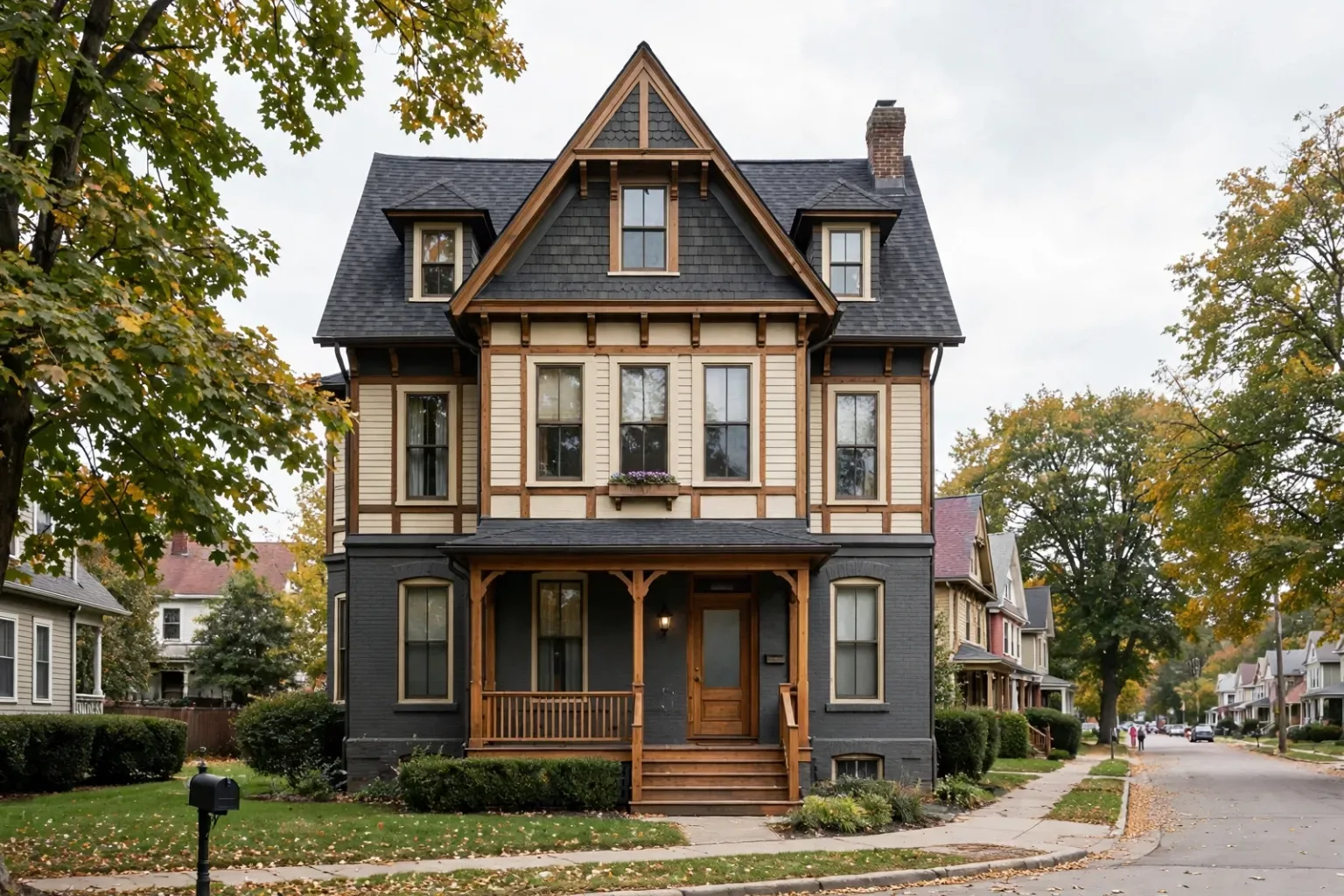
Cleveland is the highest-yielding large-metro DSCR market east of the Mississippi River. The Cleveland Clinic health system (the country’s second-largest medical campus), Case Western Reserve University, and a diversified manufacturing/logistics base create stable, permanent rental demand from a workforce that, by and large, cannot afford homeownership at current financing costs. Entry-level SFR prices around $135K median (Cuyahoga County saw a modest price firming through early 2026, reversing a soft 2025) create raw cap rate potential that is exceptional — provided you’ve built in the full cost stack, including Ohio’s elevated property taxes.
Why Investors Choose Cleveland
Cleveland’s DSCR investor appeal is straightforward: acquire SFRs at $75K–$160K, rent them for $950–$1,400/month, and target 1.25–1.50 DSCR ratios at standard loan terms. No other major metro in the Northeast or Midwest consistently produces these ratios at scale. The Cleveland Clinic’s 52,000+ direct employees represent the most durable rental demand anchor in the city — healthcare is non-cyclical, high-turnover in the first years post-training, and the salaries fall squarely in the renter demographic.
The trade-offs: Ohio is judicial foreclosure (slower lender recourse), Cuyahoga County property taxes are high, and the highest-yield neighborhoods require intensive management.
DSCR Loan Availability in Cleveland
Most major national DSCR lenders fund Cleveland. Some apply minimum value overlays ($75K–$100K) or condition requirements. Lenders with dedicated BRRRR bridge programs are particularly active here.
| Typical Cleveland DSCR Terms, 2026 | Range |
|---|---|
| Minimum DSCR | 0.75 – 1.25 |
| Max LTV (purchase, SFR) | 70% – 80% |
| Max LTV (cash-out) | 65% – 75% |
| Minimum FICO | 620 – 680 |
| Minimum property value | $75K – $100K (lender-specific) |
| Prepayment penalty | 5/4/3/2/1 standard |
Cap Rates and Neighborhood Cash Flow
2026 rental market context: Cleveland’s rental vacancy rate is approximately 5.8% as of Q1 2026, up 23.4% year-over-year in percentage terms (though from a low base, still a tight absolute rate). This increase largely reflects modest new multifamily supply rather than demand deterioration. At 5.8%, Cleveland’s vacancy remains meaningfully below the national average of 7.3%, supporting the market’s strong yield fundamentals. Rental yield averages approximately 9.8% on well-selected properties, among the highest of any major metro.
Cleveland’s investment geography spans a wide quality spectrum:
Cleveland Heights / University Heights / South Euclid: Best quality-to-yield balance in the metro. SFR and 2-4 unit at $150K–$280K, rents $1,100–$1,800. Proximity to Case Western, University Circle, and Cleveland Clinic. Cap rates 7.5%–10.0%. Lowest management intensity in the inner-ring suburbs.
Tremont / Ohio City / Detroit-Shoreway: Gentrifying near-west-side neighborhoods. 2-4 units at $200K–$400K, combined rents $2,400–$4,000. Strong mid-term/professional rental demand. Cap rates 6.0%–8.0%.
Slavic Village / Collinwood (East): Deep value SFR, $70K–$150K, rents $900–$1,300. Cap rates 10%–14%. Requires intensive management — many out-of-state investors have overestimated net yields here without accounting for turnover costs.
Glenville / Hough (Near East Side): Highest cap rate zone, $50K–$120K, rents $800–$1,100. Cap rates 12%–16%+. Most challenging operational environment in the metro.
Garfield Heights / Parma / Parma Heights (South suburban): Mid-market suburban SFR, $120K–$200K, rents $1,000–$1,400. Better lender acceptance, easier management, reasonable cap rates 7.0%–9.0%.
Lakewood: Near-west lakefront, diverse tenant base, 2-4 units at $180K–$320K. Cap rates 6.5%–8.5%. Good lender acceptance, walkable demand.
Strongsville / North Olmsted / Brook Park (SW suburbs): Airport corridor, stable workforce housing, $180K–$290K SFR, $1,100–$1,600 rents. Cap rates 6.5%–8.0%.
Ohio Judicial Foreclosure
Ohio is a judicial foreclosure state. This means the lender must file suit and obtain a court judgment before foreclosing. The practical timeline:
- Uncontested Ohio foreclosure: 8–14 months
- Contested or Cuyahoga County backlog: 18–24 months
- Cuyahoga County has a specialized foreclosure court that has modestly improved timelines since 2015
For DSCR investors, Ohio’s foreclosure timeline primarily affects lender pricing (slight risk premium vs. non-judicial states) rather than operational management. Screen tenants well and your Ohio DSCR loans function like any other state.
Property Tax
Cuyahoga County effective property tax: approximately 1.7%–2.8% of market value — one of the highest effective rates in the country. On a $135K Cleveland SFR, budget $2,300–$3,800/year in property taxes. This is the most important DSCR variable to model in Cleveland.
Key complexity: Cuyahoga County assesses residential property at 35% of appraised value (as required by Ohio law), then applies the millage rate. The resulting effective rate can look lower than the headline millage suggests, but the actual dollar amount is still high relative to the property value. Use the actual county estimate from the Cuyahoga County Fiscal Office, not a percentage rule-of-thumb.
Ohio also has a First Year Exemption for owner-occupants — this does not apply to investor-owned rental property. Investor properties pay the full non-rollback rate.
Insurance
Ohio insurance costs are moderate:
- Hazard: $1,800–$3,800/year on a $150K SFR in standard Cleveland locations
- Wind/hail: Some Lake Erie-effect weather increases hail frequency; premiums have risen 10%–15% since 2022
- Flood: Limited flood exposure for most Cleveland properties; some Cuyahoga River-adjacent parcels are in flood zones
Relatively low insurance costs partially offset the high property tax load in Cleveland DSCR ratios.
Ohio Landlord-Tenant Law
Ohio is relatively landlord-friendly:
- Eviction: 3-day notice for non-payment of rent, then 5-day summons period; uncontested eviction 15–30 days
- No rent control: Ohio preempts local rent control (ORC 4747)
- Security deposit: No statutory cap; 2-month industry standard
- No state income tax exemption: Ohio has a state income tax on rental profits — model at ~3.5% for most investors
Best DSCR Lenders for Cleveland
- Lima One Capital — highest Cleveland BRRRR volume, very active in Cuyahoga County
- Kiavi — competitive on standard SFR, Cleveland Heights/Lakewood files
- LendingOne — efficient on standard-range Cleveland SFR
- Griffin Funding — Cleveland-experienced, bridge-to-DSCR program active
- New Silver — fix-and-rent bridge, very active in the near-east-side gentrification corridor
- Visio Lending — portfolio program for accumulating multiple Cleveland SFRs
Get current Cleveland-specific quotes via get matched.
Getting Started
Cleveland rewards investors who model the full cost stack before running DSCR — especially property taxes and management reserves. Start with the DSCR calculator using the actual Cuyahoga County property tax estimate. For BRRRR in Cleveland Heights or the near-west side, use the BRRRR modeler. Then get matched for Cleveland-active lender quotes.